
 Save
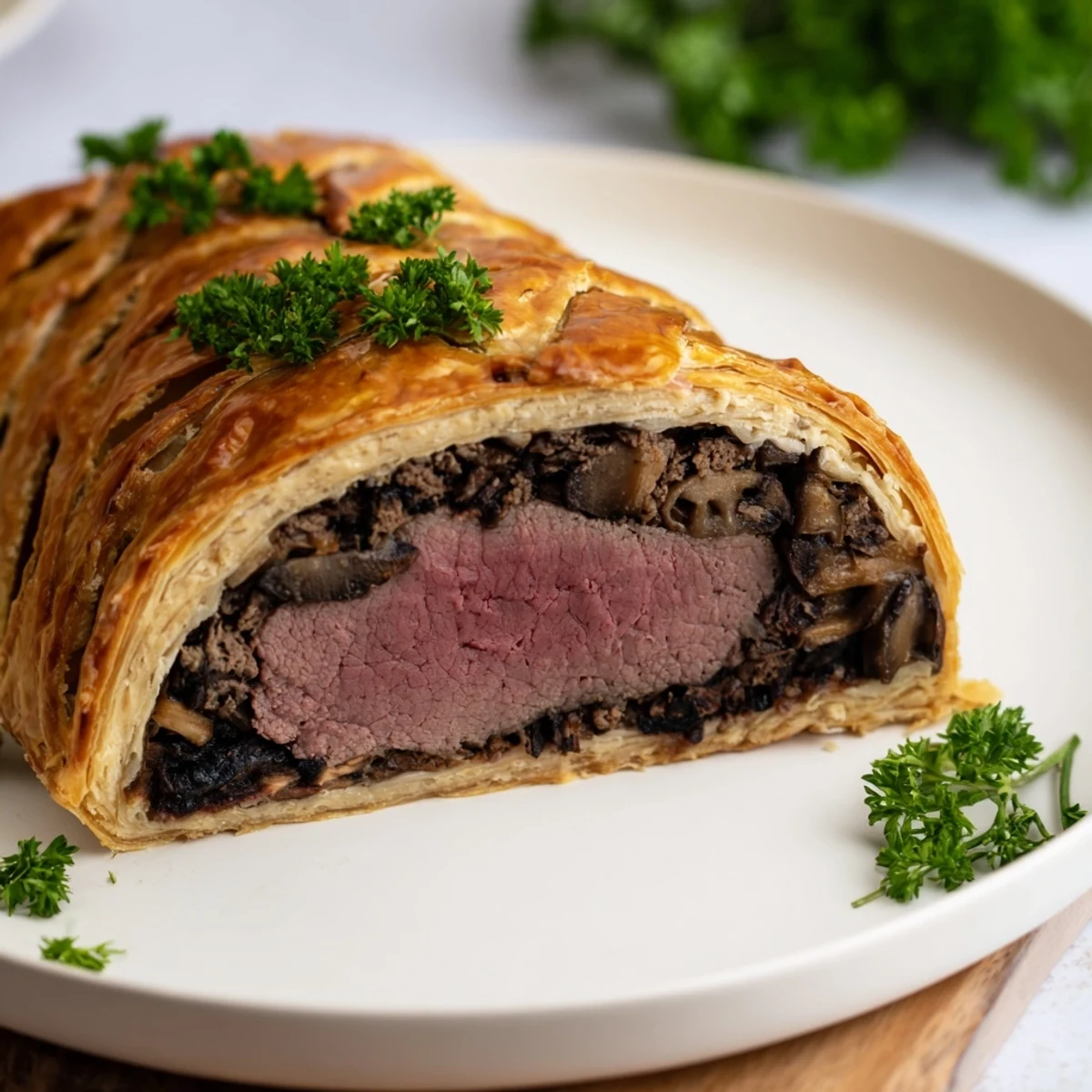
Save This classic British dish features a tender center-cut beef fillet seared to perfection, layered with a savory mushroom duxelles and prosciutto, then wrapped in flaky golden puff pastry. The beef is brushed with Dijon mustard before assembly, adding a subtle tang. Baking at high heat ensures a crisp crust while maintaining a juicy medium-rare interior. Best served rested and sliced with garnishes like fresh parsley or paired with sides such as red wine sauce or roasted potatoes, making it a show-stopping centerpiece for festive meals.
The first time I attempted Beef Wellington, I was nervous enough to triple-check every step before even touching the beef. There's something about wrapping a pristine tenderloin in mushroom duxelles and puff pastry that feels like you're performing culinary theatre, and one misstep could deflate the whole production—literally and figuratively. But that's the magic of it: when everything comes together, you pull a golden, steaming masterpiece from the oven that looks like something from a five-star kitchen, even though you made it in your own home.
I remember making this for my sister's birthday dinner, and my brother-in-law—who claims he "doesn't eat fancy food"—went completely silent after his first bite, then asked for seconds. That's when I realized Beef Wellington isn't about showing off; it's about creating a moment where texture, flavor, and effort all make sense on the same plate.
Ingredients
- Beef tenderloin (2 to 2.5 lb, center-cut): This is the star, so quality matters—ask your butcher for the center cut and have them trim it for you, which saves time and ensures even cooking.
- Salt and freshly ground black pepper: Don't skip the fresh grinding; it makes a noticeable difference in seasoning the beef before searing.
- Olive oil: Use a good one for searing; you want a high smoke point and enough flavor to contribute to browning.
- Cremini or button mushrooms (1 lb, finely chopped): The duxelles is where umami lives, and finely chopping means faster moisture release and a smoother texture.
- Unsalted butter: Two tablespoons sounds small, but it's perfect for gently cooking the aromatics without burning.
- Shallots and garlic, minced: Shallots add sweetness that balances the earthy mushrooms, while garlic needs to be minced fine so it distributes evenly.
- Fresh thyme: Two teaspoons of chopped leaves give the duxelles its herbaceous backbone—dried will taste flat by comparison.
- Prosciutto (8–10 thin slices): This acts as a moisture barrier and adds salty richness; ask the deli counter for paper-thin slices so they overlap smoothly.
- Dijon mustard: A thin brush of this on the beef adds tang and helps flavors meld; it's not overpowering if applied sparingly.
- Puff pastry (1 lb): Thaw it properly at room temperature, never in the microwave, or it becomes greasy instead of flaky.
- Egg wash: One beaten egg mixed with a splash of water gives you that professional golden-brown color.
- All-purpose flour: Just for dusting your work surface; prevents sticking without toughening the pastry.
Instructions
- Prepare your stage:
- Preheat the oven to 425°F and gather all your ingredients before you start. This dish moves quickly once you begin, and having everything ready means you're not hunting for the egg wash while your beef cools.
- Sear the beef until it's deeply browned:
- Pat the tenderloin dry, season generously with salt and pepper, then sear it in a screaming-hot skillet with olive oil for about 2 minutes on each side. You want a dark crust that seals in juices and looks restaurant-quality. Let it cool slightly on a plate, then brush every surface with Dijon mustard—don't be shy, but don't slather it either.
- Make the mushroom duxelles:
- Melt butter over medium heat and soften the shallots and garlic for 2 minutes until fragrant. Add your finely chopped mushrooms along with thyme, salt, and pepper, then let them cook, stirring often, for 10–12 minutes until all the moisture has evaporated and you have a thick, paste-like mixture. The drying step is crucial; wet duxelles will make your pastry soggy, so be patient here.
- Layer and wrap the beef:
- On plastic wrap, arrange overlapping prosciutto slices in a rectangle large enough to wrap around your beef. Spread the cooled duxelles evenly over the prosciutto, place the beef on top, and use the plastic wrap to roll everything tightly into a log, twisting the ends to seal. Refrigerate for 30 minutes so the layers set and hold their shape.
- Encase everything in pastry:
- On a lightly floured surface, roll out your puff pastry into a rectangle big enough to wrap around the beef cylinder. Remove the beef from the plastic wrap, place it in the center of the pastry, brush the pastry edges with egg wash, then fold the pastry over and seal all the seams and ends by pressing gently. Place seam-side down on a parchment-lined baking sheet.
- Apply the golden finish:
- Brush the entire pastry-wrapped beef with egg wash so it bakes to a deep, glossy golden brown. If you want to get fancy, cut decorative shapes from leftover pastry scraps, stick them on the surface, and brush those with egg wash too.
- Bake until perfectly done:
- Bake for 40–45 minutes until the pastry is deep golden and an instant-read thermometer inserted into the center reads 120–125°F for medium-rare. Remember the beef continues cooking slightly as it rests, so don't go above 125°F or you'll end up overdone.
- Rest and slice with care:
- Let the Wellington rest for 10–15 minutes before slicing. This step is not optional if you want those beautiful layers to stay intact; rushing to the table means you'll cut into a masterpiece that hasn't set.
 Save
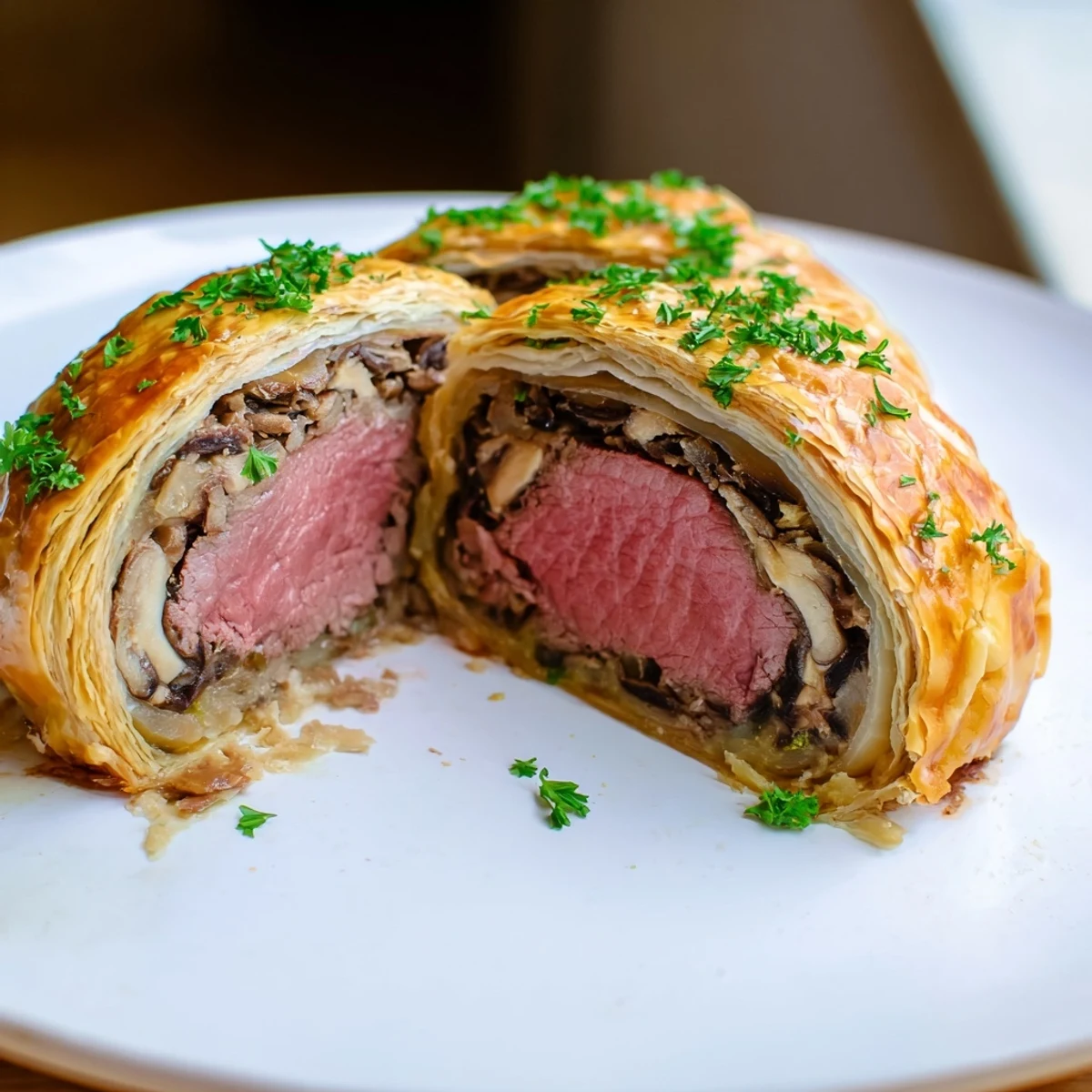
Save There's a quiet satisfaction in plating Beef Wellington—you've done something technically impressive, but it feels effortless because you trusted the process. Every time someone cuts into that golden pastry and sees the rosy beef nestled in dark mushrooms, you remember why you bothered with the extra steps.
The Importance of Temperature Control
One thing that separates a mediocre Wellington from an exceptional one is respecting the temperature of every component. The beef needs to be seared hard and fast to develop flavor, the duxelles needs to cool completely so it doesn't warm the pastry, and the oven needs to be at 425°F so the pastry puffs and browns before the beef overcooks. Each temperature serves a purpose, and cutting corners on any of them shows in the final result.
Timing and Prep Strategy
The beauty of Beef Wellington is that you can build it entirely in the morning and refrigerate it until dinner time. The duxelles can be made a day ahead, the beef seared and cooled hours beforehand, and the whole wrapped package sits happily in the fridge until you're ready to brush it with egg wash and slide it into the oven. This makes it perfect for entertaining because you're not scrambling during the dinner hour.
Serving and Pairing Ideas
Beef Wellington demands thoughtful sides and a serious wine pairing to shine. Roasted potatoes with rosemary, creamed spinach, or buttered green beans all complement the richness of the beef and pastry without competing for attention. A full-bodied red wine—Bordeaux, Burgundy, or a quality Cabernet—is the obvious choice, but I've also had memorable versions with earthy Pinot Noir that felt just as fitting.
- Make a red wine reduction or béarnaise sauce to serve alongside; the pastry is rich enough that you want something acidic or savory to balance it.
- Plate it while it's still warm so the pastry stays crisp and the beef maintains its perfect rosy center.
- If you're feeding a crowd, let everyone slice their own portion so they can see those beautiful layers you worked so hard to create.
 Save
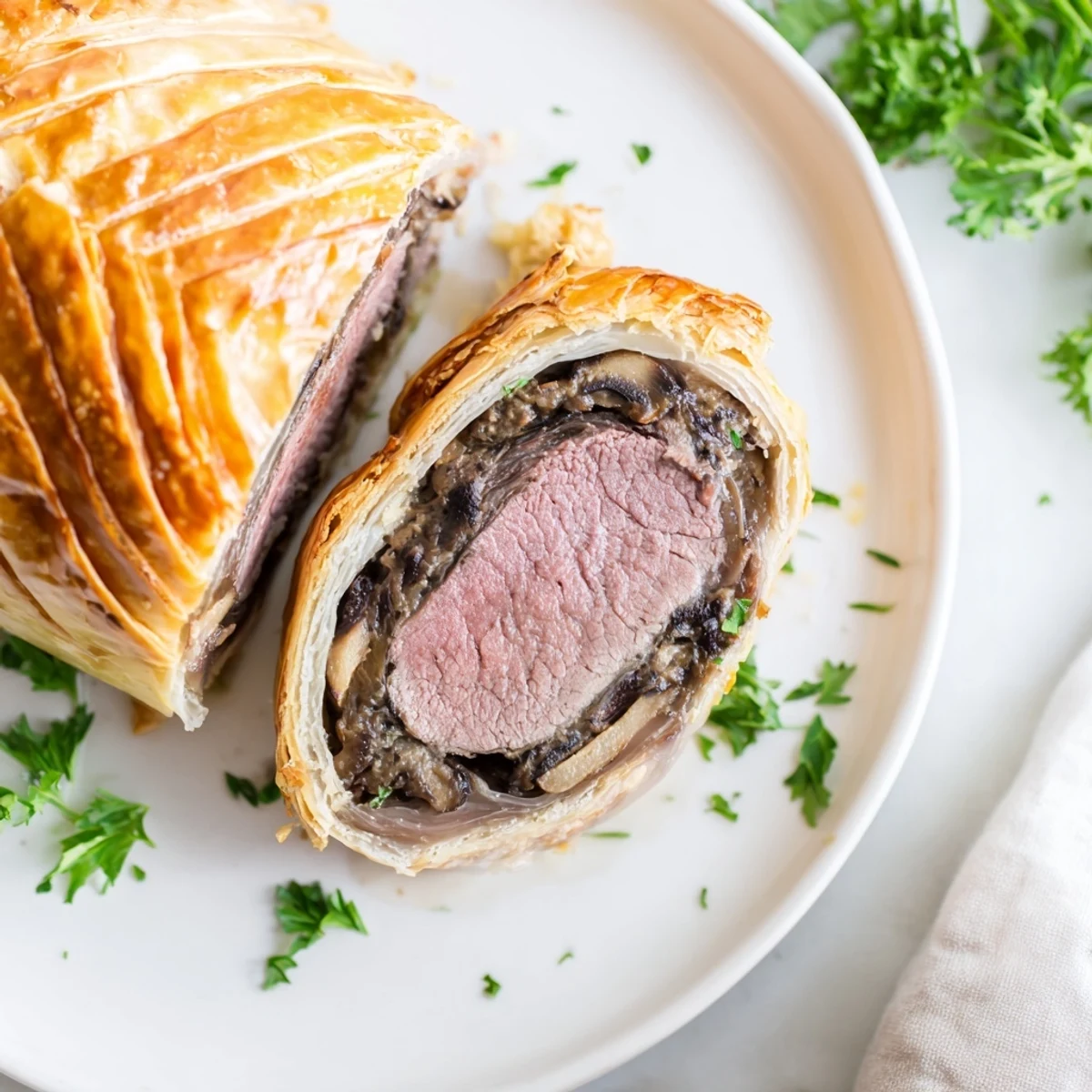
Save Beef Wellington is one of those dishes that feels ceremonial because it is—you're building something beautiful and delicious piece by piece. Serve it with confidence and watch people's faces light up when they realize you made something this impressive from scratch.
Common Recipe Questions
- → What cut of beef is best for this dish?
-
The center-cut beef tenderloin is ideal due to its tenderness and uniform shape.
- → How should the mushroom duxelles be prepared?
-
Finely chop mushrooms, shallots, and garlic, then sauté with butter and thyme until the mixture is dry and fragrant.
- → Why is Dijon mustard used on the beef?
-
Dijon mustard adds subtle tang and helps flavor the meat, enhancing the overall taste profile.
- → How do I ensure the puff pastry is golden and crisp?
-
Brushing the pastry with beaten egg before baking promotes a glossy, golden crust. Bake at 425°F until golden brown.
- → What internal temperature should the beef reach?
-
For medium-rare, aim for 120–125°F (49–52°C) using an instant-read thermometer.
- → Can I prepare this dish in advance?
-
Yes, after assembling, refrigerate the wrapped beef for 30 minutes before baking to help it hold shape.