
 Save
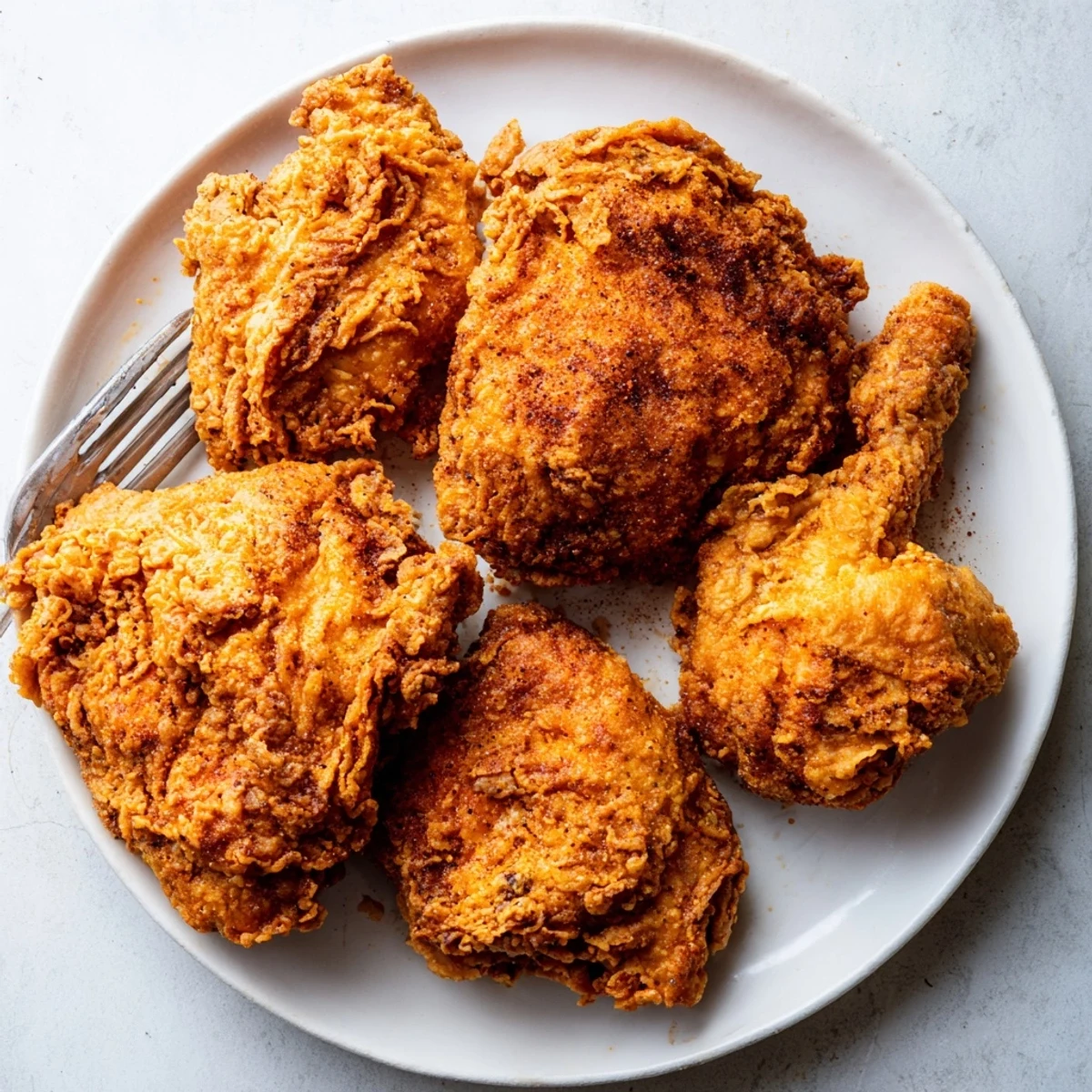
Save Southern-style chicken featuring tender breasts marinated in buttermilk, then double-dipped in a seasoned flour blend with paprika, garlic, and cayenne. The coating creates an extra-crunchy exterior while keeping the meat juicy inside. Fried at 350°F until golden brown, this classic delivers authentic flavor and texture that pairs perfectly with mashed potatoes and coleslaw.
The oil was at that perfect shimmery stage when my roommate walked in and announced she'd never had homemade fried chicken. I'd been tinkering with a double-dredge technique for weeks, trying to recreate that crunch we'd chase at late-night diners after college shows. That night changed everything—she ate three pieces standing up at the counter, and I knew this method was something special. Now it's the only way I'll make it.
I made this for a Super Bowl party once, and honestly, people were more excited about the chicken than the actual game. My friend's dad, who prides himself on his Southern cooking, cornered me in the kitchen for the secret. There's something about serving a platter of golden, steaming pieces that brings everyone to the table faster than anything else.
Ingredients
- 4 boneless, skinless chicken breasts: Pounding them to even thickness ensures they cook through before the coating burns—learned this the hard way
- 1 cup buttermilk: This is the tenderizing miracle worker that also helps the flour cling like magic
- 1 teaspoon hot sauce: Just enough heat to wake everything up without overwhelming
- 2 cups all-purpose flour: The base of our crispy exterior—dont be tempted to skip the cornstarch addition
- 1 tablespoon cornstarch: My secret weapon for extra crunch that doesn't taste gritty
- 2 teaspoons paprika: Adds that gorgeous golden color and subtle sweetness
- 1 teaspoon garlic powder: Essential for that savory backbone
- 1 teaspoon onion powder: Rounds out the flavor profile beautifully
- 1 teaspoon each salt and black pepper: Don't skimp here—seasoning the flour is crucial
- 1/2 teaspoon cayenne pepper: Optional, but I love the gentle warmth it builds
- 1 teaspoon dried thyme: An earthy note that makes it taste homemade, not fast food
- 2 large eggs and 1/2 cup milk: This egg wash is the glue between your two coating layers
- 4 cups vegetable oil: Enough to submerge the chicken properly without dangerously bubbling over
Instructions
- Pound the chicken:
- Place each breast between plastic wrap and use your meat mallet until they're an even 1/2-inch thick—this is therapeutic and essential for uniform cooking
- Start the soak:
- Whisk buttermilk and hot sauce in a large bowl, add chicken, turn to coat, cover and let it hang out in the fridge for at least an hour—overnight is even better
- Mix your coating:
- Combine flour, cornstarch, paprika, garlic powder, onion powder, salt, pepper, cayenne, and thyme in a shallow dish
- Make the egg wash:
- Whisk eggs and milk in a separate bowl until they're completely blended
- Double dredge time:
- Pull chicken from buttermilk, let excess drip off, coat in flour, dip in egg wash, then press back into flour again—this second coat is everything
- Get your oil ready:
- Heat oil in a deep skillet or Dutch oven until it reaches 350°F—use a thermometer or test with a wooden spoon (bubbles should dance around it)
- Fry in batches:
- Cook chicken for 5–7 minutes per side until golden brown and it hits 165°F internally
- Rest and drain:
- Let pieces drain on a wire rack for 5 minutes before serving—this keeps the crunch intact
 Save
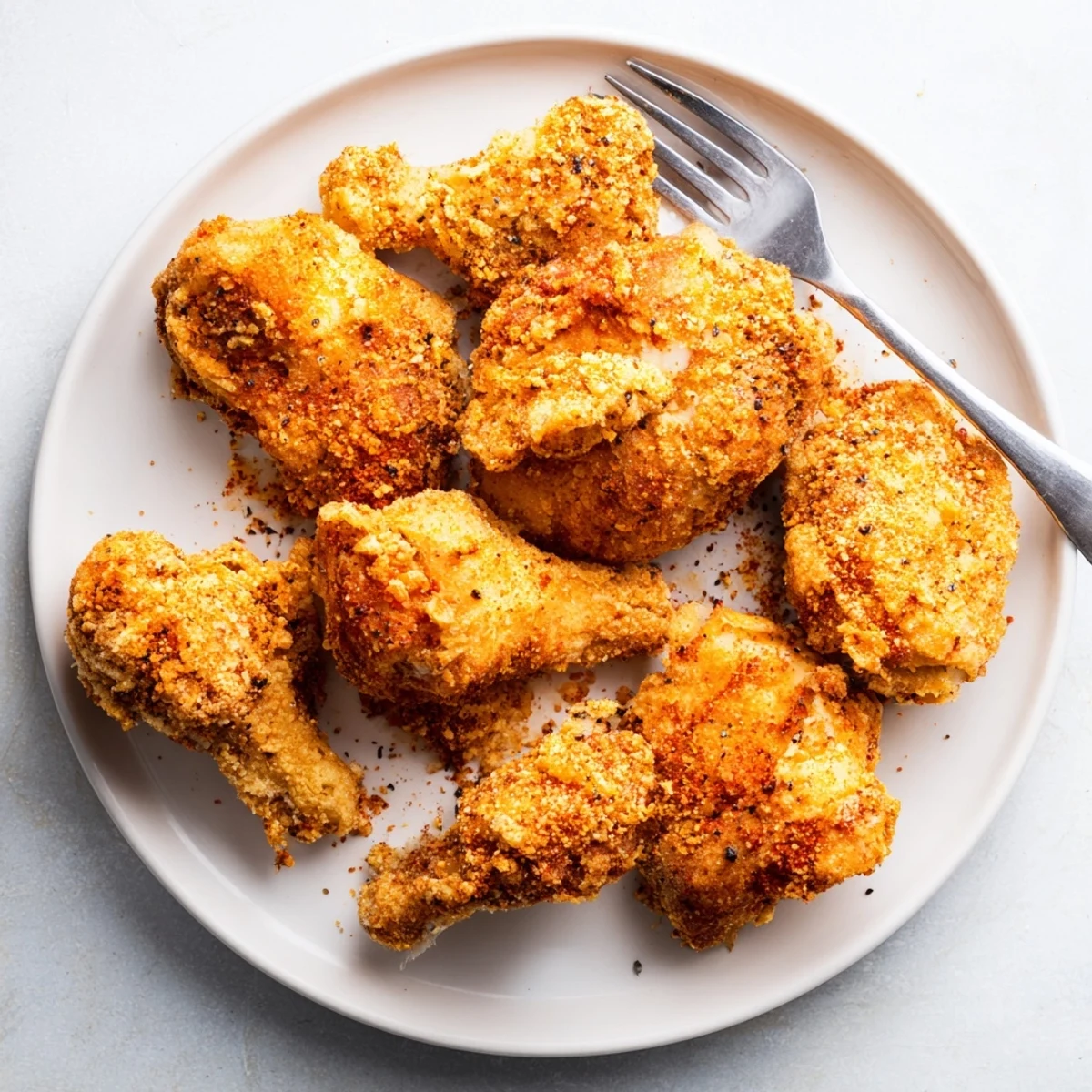
Save My little brother called me last summer, said he'd tried making fried chicken and ended up with burnt outside and raw inside. We walked through the double-dredge method together over the phone, and when he sent a photo of his first successful batch, I swear I could hear the crunch through the screen. Now he texts me every time he makes it, calling it his 'party trick'.
Getting That Buttermilk Bath Right
The buttermilk isn't just for show—it's breaking down proteins and tenderizing from the inside out. I've let chicken soak anywhere from one hour to overnight, and honestly, the longer soak makes a noticeable difference. If you're short on time, even 30 minutes helps, but plan ahead when you can.
Temperature Matters More Than You Think
Too cold and your chicken will be greasy, too hot and it'll burn before cooking through. I keep an instant-read thermometer near the stove now after ruining a batch by guessing. The sweet spot is 350°F—hot enough to instantly seal the coating, gentle enough to cook the meat through.
Serving It Up Right
Classic sides like mashed potatoes and gravy never disappoint, but I've also served this with waffles for Sunday brunch and people went wild. The leftovers (if you have any) reheat surprisingly well in a 375°F oven for about 10 minutes.
- Set up a coating station with three shallow dishes to keep your workflow clean
- Season your flour aggressively—this is your only chance to salt the exterior
- Let oil come back to temperature between batches for consistent results
 Save
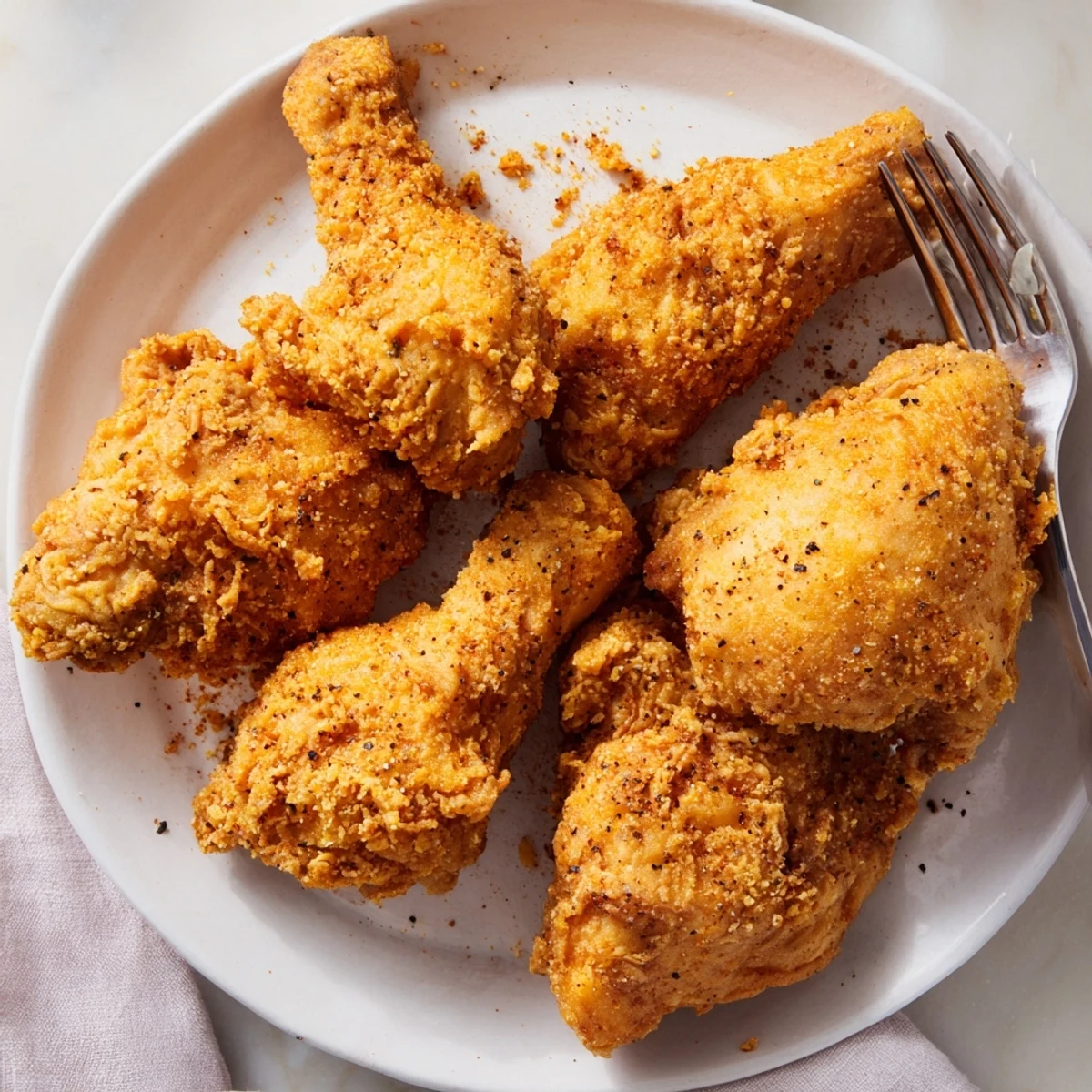
Save There's something profoundly satisfying about pulling a piece of chicken from the oil, golden and crackling, and knowing you made that happen. Hope this recipe finds its way into your regular rotation.
Common Recipe Questions
- → Why double-dip the chicken in flour?
-
Double-dipping creates an extra-thick, crunchy coating that stays crispy longer. The first layer adheres to the buttermilk-marinated meat, while the egg wash helps the second layer of seasoned flour bond securely, resulting in that signature Southern crunch.
- → How long should chicken marinate in buttermilk?
-
Marinate for at least 1 hour, but overnight is ideal. The buttermilk tenderizes the meat and adds subtle tanginess while the hot sauce provides depth. Longer marinating creates more flavorful, juicy chicken that withstands high-heat frying.
- → What's the best oil temperature for frying?
-
Maintain oil at 350°F (175°C) for optimal results. Too cool and the coating becomes soggy; too hot and the outside burns before the meat cooks through. Use a kitchen thermometer to monitor temperature throughout frying for consistently golden, crispy results.
- → How do I keep chicken crispy after frying?
-
Place cooked pieces on a wire rack rather than paper towels to prevent sogginess. If serving later, keep chicken warm in a 200°F oven on the rack. The air circulation prevents steam from softening the coating while maintaining serving temperature.
- → Can I use chicken thighs instead of breasts?
-
Absolutely. Thighs offer more fat and natural juiciness, making them forgiving for beginners. Adjust frying time slightly—thighs typically need 6-8 minutes per side depending on thickness. Always verify internal temperature reaches 165°F regardless of cut.
- → What sides complement this dish?
-
Classic Southern sides like creamy mashed potatoes with gravy, tangy coleslaw, braised collard greens, or macaroni and cheese create a complete meal. For lighter fare, serve with simple green salad or cornbread to balance the rich, crispy chicken.