
 Save
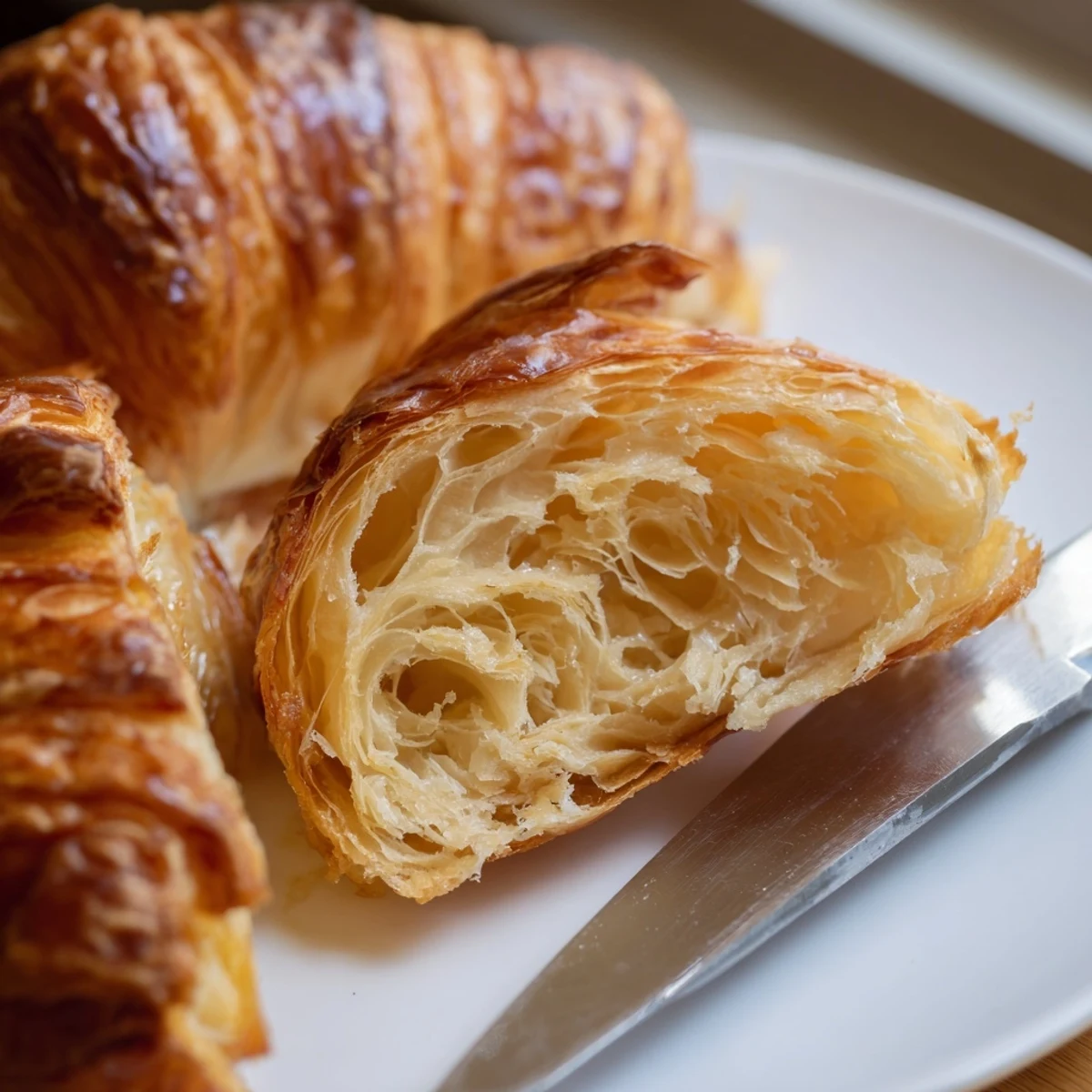
Save Create authentic French croissants without gluten through careful lamination technique. These pastries feature 148g butter layered throughout gluten-free flour dough, resulting in golden, flaky layers that rival traditional bakery versions. The process involves multiple rolling and folding turns with 20-minute chilling intervals to develop proper structure.
Essential for achieving light texture: keep butter and dough cold during lamination, allow proper proofing time until puffy, and bake at high heat (400°F) for deep golden color. Each croissant delivers 285 calories with 15g fat from premium butter.
Customize for dietary needs by swapping dairy butter for plant-based alternatives and choosing almond or dairy milk. Serve warm with artisan jam or dark chocolate for elevated brunch experience.
The morning fog was still clinging to my kitchen windows when I decided to attempt what my Parisian friend called "the impossible pastry" gluten-free croissants. She had laughed when I mentioned it, insisting some things simply cannot be recreated without wheat. Three failed attempts later, standing over a tray of golden, laminated perfection, I understood what she meant about the challenge but proved her wrong about the impossibility.
My sister hadnt had a real croissant in five years since her celiac diagnosis. I made these for her birthday brunch last spring and watched her take that first hesitant bite then close her eyes and whisper "oh my god" three times. She called me two days later to report she had eaten three for breakfast and didnt even feel guilty about it.
Ingredients
- Glutenfree allpurpose flour: The xanthan gum is nonnegotiable here it creates the elasticity that gluten usually provides
- Almond flour: This was a gamechanging discovery it adds structure and a subtle richness that GF flour blends often lack
- Instant yeast: I prefer instant over active dry because it dissolves more easily in the lukewarm liquid mixture
- Cold butter: The temperature of your butter will make or break the lamination process keep it fridgecold until the moment you need it
Instructions
- Mix the dough:
- Whisk your dry ingredients together in a large bowl until theyre completely uniform. In another bowl combine the warm milk water egg and softened butter then pour into the dry ingredients mixing until a sticky shaggy dough forms.
- First chill:
- Shape the dough into a rough rectangle wrap it tightly in plastic and refrigerate for 45 minutes. This rest period is crucial for the flour to fully hydrate and the dough to become manageable.
- Prepare the butter layer:
- Slice your cold butter into thin slabs and sandwich them between two sheets of parchment paper. Pound and roll the butter into an even 6 by 8inch rectangle returning it to the fridge if it starts softening.
- First fold:
- Roll your chilled dough into a 12 by 8inch rectangle on a lightly floured surface. Place the butter layer over the bottom twothirds of the dough leaving a small border then fold the top third down over the butter followed by the bottom third up like a letter.
- Create the layers:
- Rotate the dough 90 degrees roll it out again and fold once more. Repeat this process two additional times chilling for 20 minutes between each turn to keep the butter from melting into the dough.
- Final chill:
- After your last fold wrap the dough and refrigerate it for a full hour. This rest allows the glutenfree flour to relax which prevents the dough from shrinking when you roll it out later.
- Shape the croissants:
- Roll the dough into a 16 by 10inch rectangle and cut it into 8 triangles using a sharp knife or pizza cutter. Starting from the wide end roll each triangle tightly tucking the point underneath and place them on a parchmentlined tray.
- Proof the pastries:
- Cover the tray loosely and let the croissants rise in a warm spot for 1 to 1.5 hours. They should look puffy and slightly jiggly when you gently shake the tray.
- Bake to golden:
- Whisk the egg with milk for the egg wash and brush each croissant lightly. Bake at 400F for 20 to 22 minutes until theyre deep golden brown and your kitchen smells like a Parisian bakery.
 Save
Save These became my sons favorite school morning treat. He started asking for them in his lunchbox which honestly felt like a parenting win warm homemade pastries instead of packaged granola bars. Now he helps me with the final rolling his small hands surprisingly good at getting that tight coil shape.
Making Them DairyFree
Ive tested this recipe multiple times with highquality plantbased butter and almond milk. The results are surprisingly close to the original though the butter layer requires even more attention to temperature since dairyfree butter softens faster than regular butter. Use a Europeanstyle vegan butter block rather than tub spreads for better lamination.
Freezing Instructions
You can freeze the shaped unbaked croissants on a baking tray until firm then transfer them to a freezer bag. When you want fresh baked croissants let them proof overnight in the refrigerator then bring to room temperature for an hour before baking as directed.
Storage And Reheating
Fresh croissants are best within 24 hours though they will keep in an airtight container for two days. To revive dayold croissants sprinkle them lightly with water and warm in a 350F oven for 5 minutes. Never microwave them unless you want chewy disappointment.
- Wrap cooled croissants individually in plastic wrap before freezing for longer storage
- The egg wash can be made dairyfree with plain almond milk or water
- Room temperature ingredients combine more smoothly so take the egg out of the fridge 30 minutes before starting
 Save
Save There is something profoundly satisfying about pulling a tray of these from the oven especially when you remember all the times people said glutenfree pastries could never be this good. Happy baking my friend.
Common Recipe Questions
- → What makes gluten-free croissants flaky?
-
Cold butter layered between dough creates steam pockets during baking. Multiple rolling and folding turns distribute butter evenly, forming distinct flaky layers. Chilling between turns prevents butter from melting into dough.
- → Can I make dairy-free gluten-free croissants?
-
Yes, substitute cold plant-based butter for dairy butter and use almond or oat milk. The lamination technique remains identical. Plant-based butters with similar fat content work best for achieving proper flaky texture.
- → Why is chilling the dough important?
-
Chilling relaxes gluten-free flour proteins, making dough pliable for rolling. Cold butter maintains separate layers during lamination. Without proper chilling, butter melts into dough, resulting in dense pastries rather than flaky croissants.
- → How do I know when croissants are fully proofed?
-
Proofed croissants appear puffy and jiggle slightly when gently shaken. They increase noticeably in size, typically doubling. The surface feels smooth and turgid. Under-proofed croissants won't achieve maximum rise; over-proofed ones may collapse during baking.
- → What causes gluten-free croissants to spread flat?
-
Warm butter during lamination melts into dough rather than creating distinct layers. Insufficient chilling between folds causes butter softening. Over-proofing weakens structure, causing croissants to spread sideways instead of rising upward during baking.
- → Can I freeze gluten-free croissant dough?
-
Yes, freeze dough after final folding and before shaping. Wrap tightly in plastic and freeze up to 2 weeks. Thaw overnight in refrigerator before rolling and shaping. Bake proofed croissants from frozen, adding extra time as needed.