
 Save
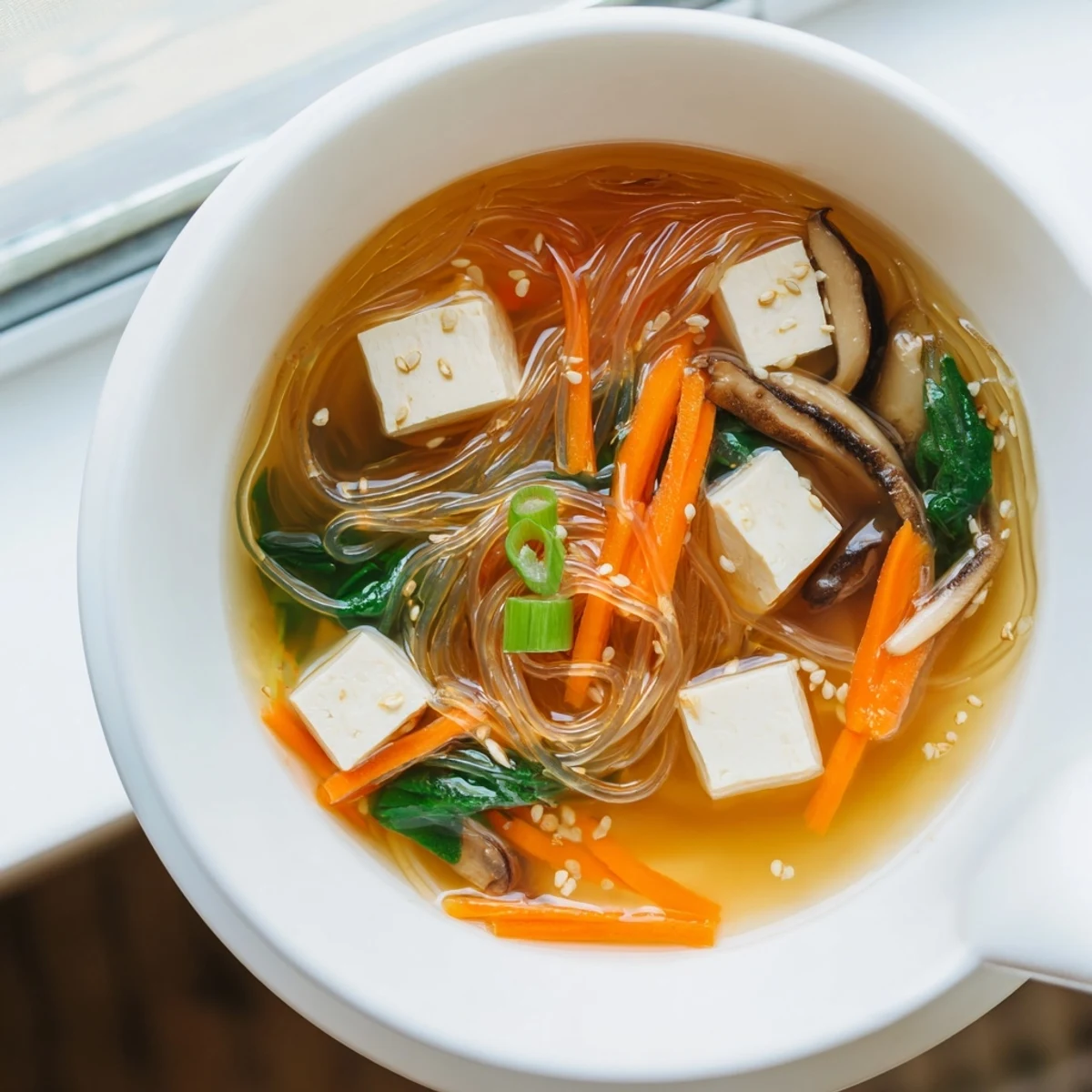
Save This warming Japanese soup combines translucent harusame glass noodles with a delicate dashi-based broth seasoned with soy sauce, mirin, and toasted sesame oil. The dish comes together in just 25 minutes, featuring tender carrots, earthy shiitake mushrooms, and fresh spinach or bok choy. Silken tofu cubes add protein while keeping the broth light and clear. Finished with nutty sesame seeds and crisp spring onions, each bowl offers a balance of textures and authentic Japanese flavors. Perfect for a quick lunch or gentle dinner, this versatile soup can be customized with your favorite vegetables or proteins.
Rain was tapping against my kitchen window last Tuesday when I remembered the package of glass noodles tucked in the back of my pantry. Something about translucent noodles swimming in hot broth just felt right for that gray afternoon. My grandmother used to say certain foods know exactly what weather youre having.
Last winter my friend Mai came over feeling under the weather and I threw together a version of this soup with whatever I had on hand. She sat at my counter watching steam curl off the bowl and told me it reminded her of growing up in Osaka. Now whenever I make it I think about her voice describing the street vendors who sold noodle soup outside her elementary school.
Ingredients
- 5 cups dashi stock: The backbone of Japanese cooking. If you cant find dashi, a good quality low-sodium broth works surprisingly well.
- 2 tbsp soy sauce: Adds that essential umami depth. I keep a small bottle of naturally brewed soy sauce just for recipes like this.
- 1 tbsp mirin: Sweet rice wine that balances the saltiness perfectly. Dont skip it, it makes a noticeable difference.
- 1 tsp sesame oil: A little goes a long way. Toast your own seeds and press them if youre feeling ambitious.
- Harusame noodles: These delicate glass noodles are made from mung beans. They cook up translucent and slightly slippery in the most appealing way.
- 1 medium carrot: Julienned into thin matchsticks so they cook quickly and look beautiful floating in the broth.
- 100 g shiitake mushrooms: Fresh shiitakes have this meaty texture that holds up beautifully in hot soup.
- Baby spinach: Added at the very last minute so it keeps its bright green color instead of turning muddy.
- Firm tofu: Cubed into bite-sized pieces that soak up the broth like little flavor sponges.
Instructions
- Build your broth base:
- Combine the dashi stock, soy sauce, mirin, sesame oil, and salt in a large saucepan. Let it come to a gentle simmer over medium heat, watching as the steam starts carrying that first savory waft of aroma through your kitchen.
- Soften the hard vegetables:
- Add your carrots and shiitake mushrooms to the simmering broth. Let them cook for about 5 minutes until you can easily pierce a carrot with a fork but it still has a little snap remaining.
- Add the protein:
- Gently slip in the tofu cubes if youre using them. Let them simmer for just 2 minutes so they warm through without falling apart.
- Prep the noodles:
- While the broth simmers, place the glass noodles in a heatproof bowl and cover them with boiling water. Let them soak for 4 to 5 minutes until tender, then drain well and divide among your serving bowls.
- Finish with greens:
- Drop the spinach into your simmering broth and cook for exactly 1 minute. You want it just wilted and bright green, not sad and floppy.
- Assemble and serve:
- Ladle the hot broth and vegetables over your waiting noodles in each bowl. Garnish generously with toasted sesame seeds and those extra slivers of spring onion while everything is piping hot.
 Save
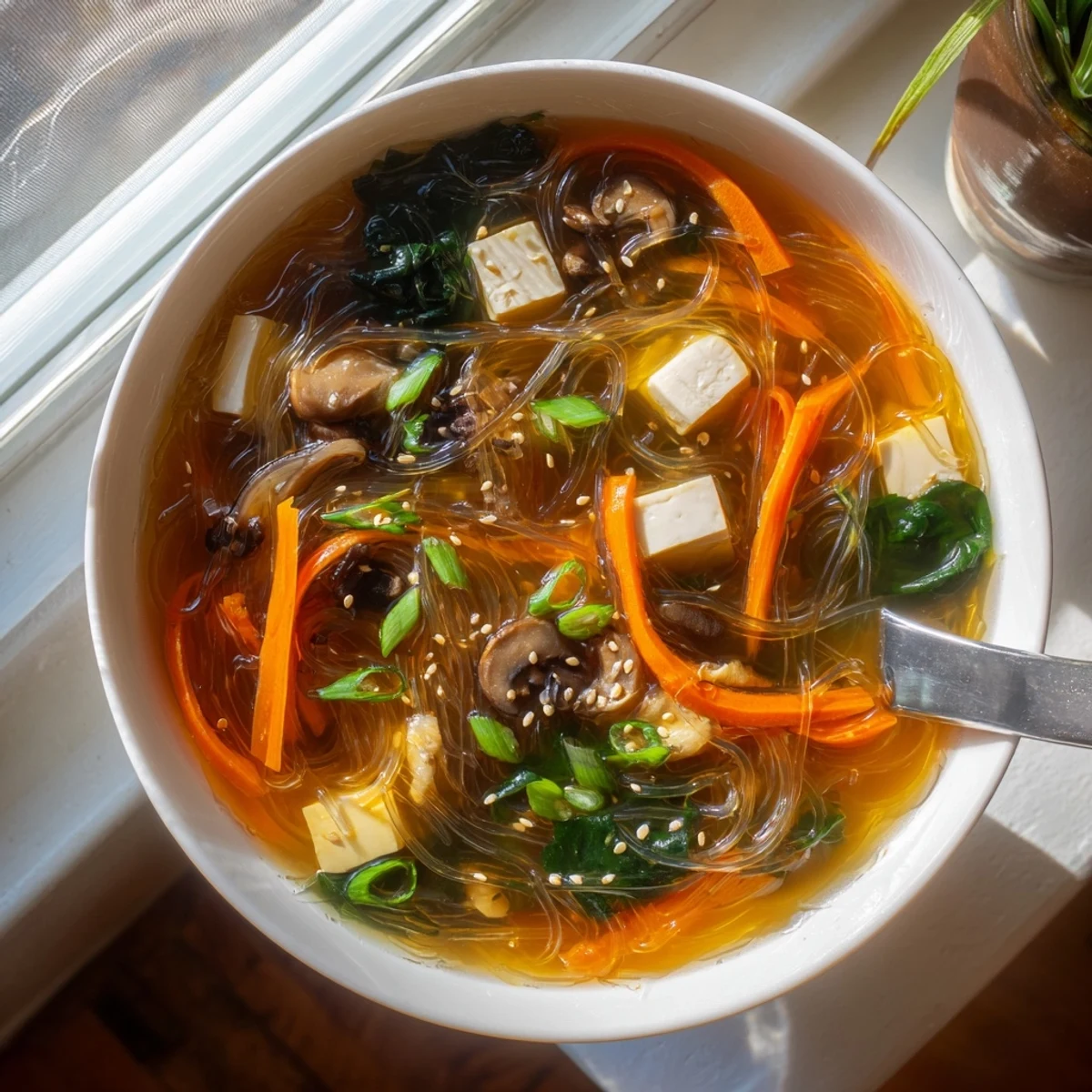
Save My partner came home from a terrible day at work to find this soup simmering on the stove, and the way his shoulders dropped when he smelled the broth told me everything. Sometimes food really is love in its most basic form.
Making It Your Own
Ive discovered that this soup is incredibly forgiving. Last week I added some shredded cabbage and a handful of corn kernels because thats what was in my refrigerator. The sweetness from the corn actually played beautifully against the savory broth. Trust your instincts with what you have on hand.
The Secret To Clear Broth
Keeping your broth from getting cloudy is all about temperature control. Never let it come to a rolling boil, that aggressive heat breaks down ingredients and clouds the liquid. A gentle simmer, where small bubbles rise lazily to the surface, keeps everything crystal clear and lets each ingredient maintain its integrity.
Make-Ahead Wisdom
You can prep all your vegetables up to a day in advance and store them in sealed containers in the refrigerator. The broth can be made ahead and reheated gently. But here is the thing about noodles.
- Cook the noodles fresh right before serving
- Never store cooked glass noodles in broth, they turn into an unappealing blob
- Keep your garnishes separate until the very last moment
 Save
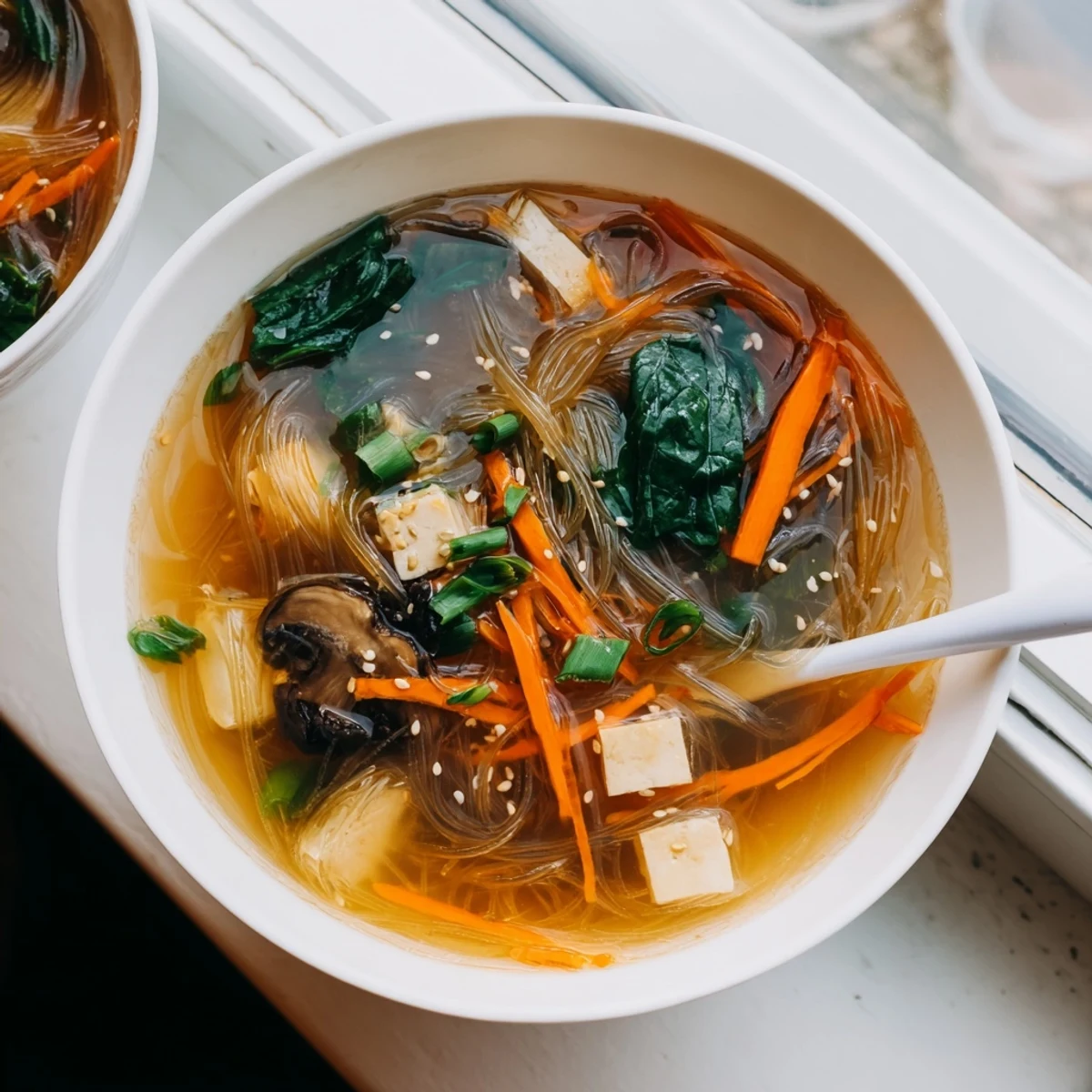
Save Slurp this soup while its still steaming, preferably wrapped in a cozy blanket with rain still falling outside. Some recipes just understand exactly what you need.
Common Recipe Questions
- → What are harusame noodles?
-
Harusame are Japanese glass noodles made from mung bean starch, potatoes, or sweet potatoes. They're translucent, gluten-free, and have a delicate texture that absorbs flavors beautifully while maintaining a pleasant chewiness.
- → Can I make this soup vegetarian?
-
Absolutely. Substitute traditional dashi (which contains bonito flakes) with vegetable broth or kombu dashi for a vegetarian version. Omit tofu or use a soy-free alternative if needed.
- → How do I store leftovers?
-
Store the broth and vegetables separately from the noodles in airtight containers in the refrigerator for up to 2 days. Reheat the broth and cook fresh noodles just before serving, as glass noodles can become mushy when stored in liquid.
- → What vegetables work best in this soup?
-
Carrots, shiitake mushrooms, spinach, and bok choy are traditional choices. You can also add enoki mushrooms, wakame seaweed, snow peas, or thinly sliced cabbage for extra nutrition and texture variation.
- → Is this soup gluten-free?
-
Harusame noodles are naturally gluten-free, but always check the packaging as some brands may process wheat products. Use tamari instead of soy sauce and verify your dashi is gluten-free to ensure the entire dish is safe.
- → Can I add protein besides tofu?
-
Yes, shredded cooked chicken, pork, or shrimp work wonderfully. For vegetarian options, try edamame, chickpeas, or extra vegetables. Add protein during the final few minutes of simmering to heat through.