
 Save
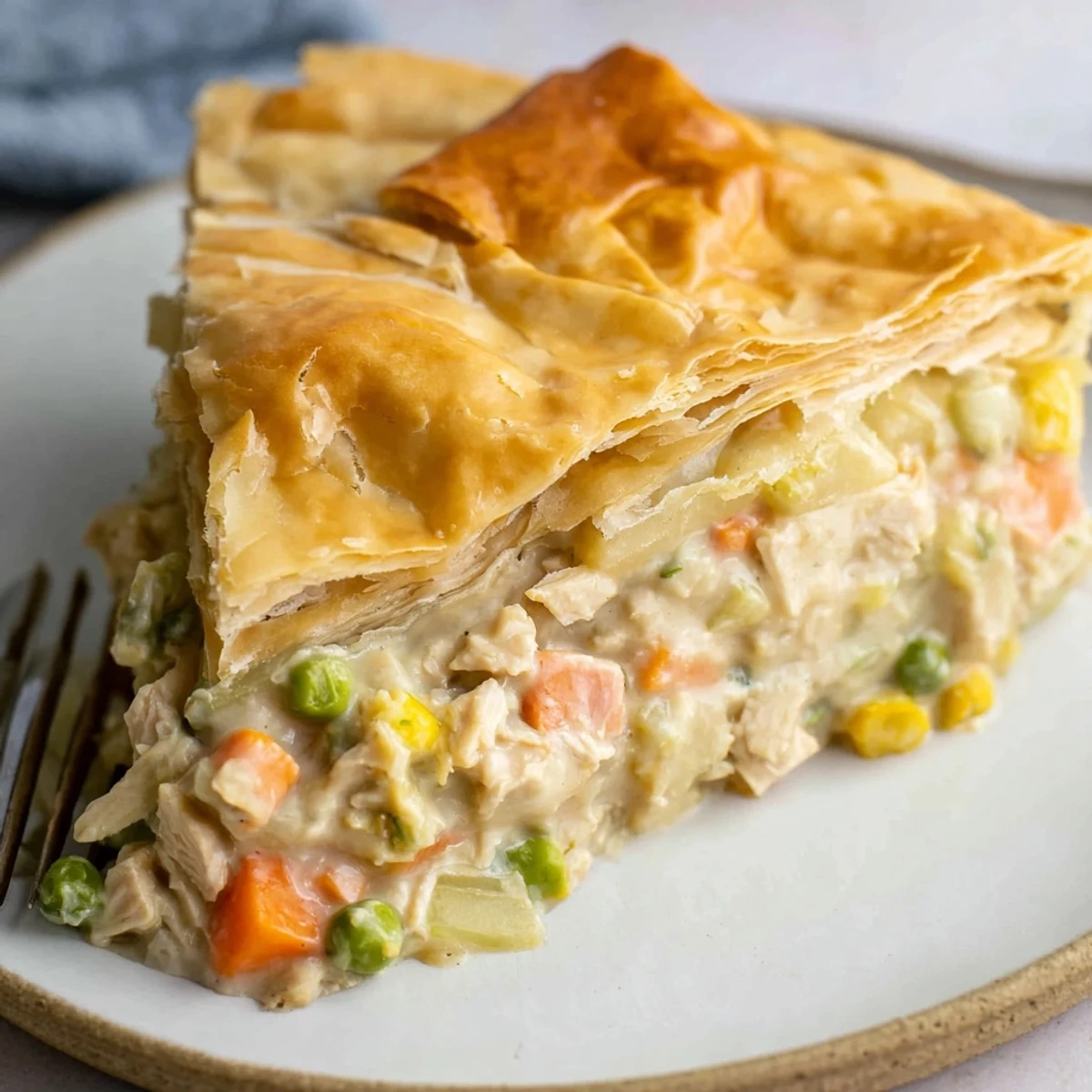
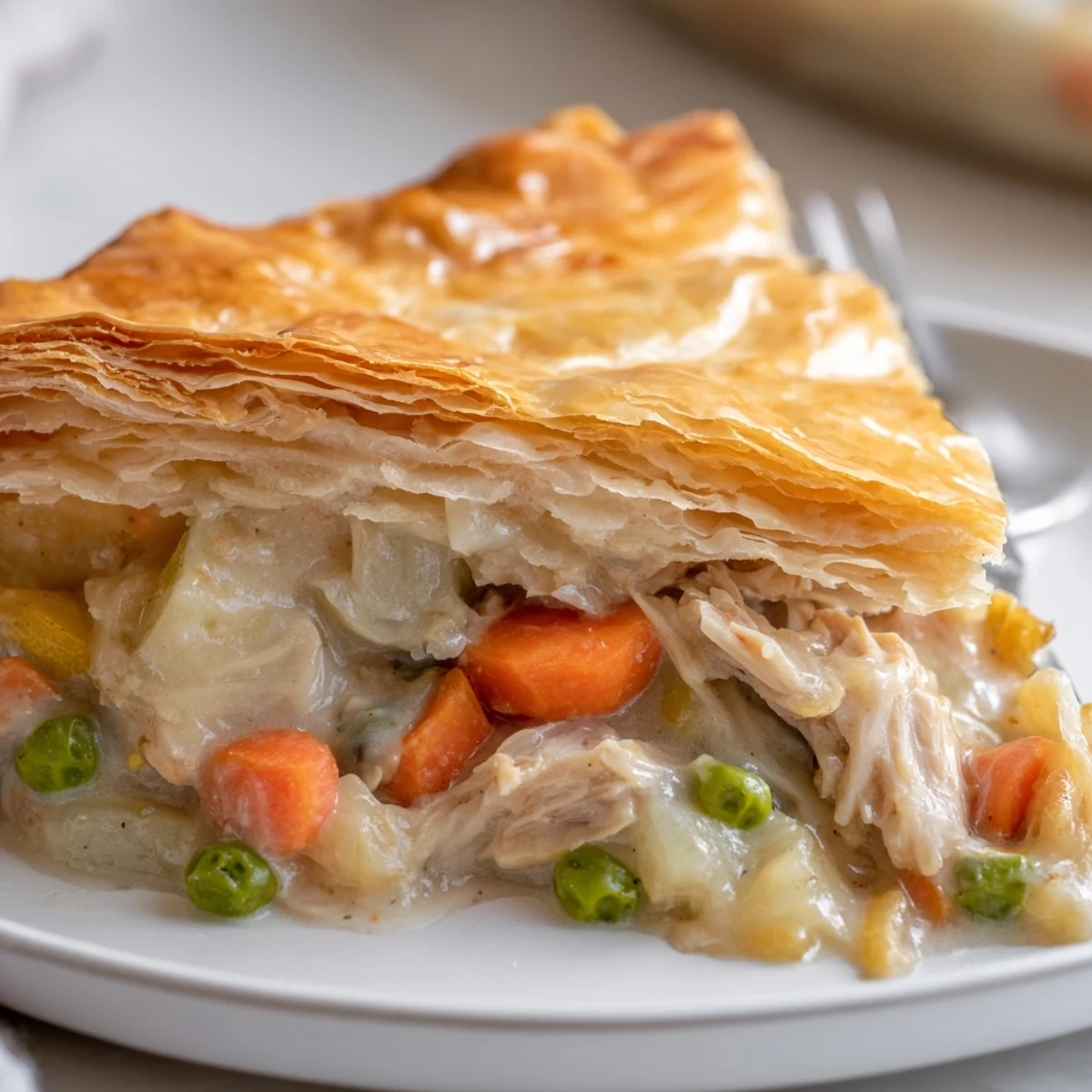
Save This comforting dish features tender turkey and mixed vegetables simmered in a creamy sauce, perfectly topped with a flaky puff pastry crust. Sautéed onions, carrots, celery, potatoes, and peas combine for balanced flavor and texture. The rich sauce, seasoned with thyme and sage, thickens gently before filling the pie dish. After covering with puff pastry and brushing with egg wash, it bakes to golden perfection. Ideal for cozy dinners or transforming holiday turkey leftovers into a satisfying meal.
There's something about the smell of butter and herbs simmering together that instantly transports me to my grandmother's kitchen on a gray November afternoon. She'd pull a golden pot pie from the oven without even checking it, claiming she could hear when the filling was ready to bubble. I spent years thinking she had some magical sense until I finally realized she was just listening for that particular soft whistle of steam escaping the crust. Now, whenever I make this turkey pot pie, I do the same thing—and it works every single time.
I made this for my neighbor after she came home from the hospital, and watching her face when she opened the door to that aroma made me understand why people bring pot pie as comfort food. She told me later that she ate half of it cold straight from the fridge at midnight because she couldn't wait until morning. That's when I knew I'd gotten the filling right—creamy but not heavy, savory but not one-note.
Ingredients
- Cooked turkey, 3 cups: Use leftover roasted turkey, or grab a rotisserie chicken from the store if you don't have holiday leftovers—the meat just needs to be tender and flavorful enough to carry the creamy sauce.
- Carrots and celery, 1 cup each: These are your flavor foundation, so take time to dice them fairly small so they soften evenly in the broth.
- Frozen peas, 1 cup: Buy the frozen kind rather than canned—they'll stay intact and add a bright pop of color that looks intentional rather than accidental.
- Potatoes, 1 cup diced: Use waxy potatoes like red or fingerling if you can, as they hold their shape better than russets in a creamy filling.
- Onion, 1 medium: This is your sweetness and softness, so don't skip it even if onions aren't your favorite raw ingredient.
- Unsalted butter, 4 tablespoons: This is where your sauce gets its richness, so use good butter and don't think you can substitute oil without losing something essential.
- All-purpose flour, 1/3 cup: This makes the roux that thickens everything—it needs those few minutes of cooking time to lose its raw taste, so don't rush it.
- Broth, 2 cups low-sodium: Low-sodium lets you control the salt level, which matters because you're also adding milk and cream.
- Whole milk, 3/4 cup: This brings a gentle creaminess without making the filling heavy or pasty, and it's forgiving if you slightly overcook it.
- Salt and black pepper: Taste as you go because you'll know better than any recipe how seasoned your broth started out.
- Dried thyme and sage, 1/2 teaspoon each: These are the quiet herbs that make people ask what that subtle flavor is—don't leave them out.
- Puff pastry, 1 sheet thawed: Let it thaw at room temperature for about 30 minutes before using, and never force it or it'll tear when you try to drape it over the filling.
- Egg wash, 1 beaten egg: This is what gives the crust that glossy, restaurant-quality golden brown finish that makes everyone think you're more skilled than you are.
Instructions
- Preheat and set the stage:
- Get your oven to 400°F before you start cooking anything else. Have your baking dish clean and ready on the counter, because once your filling is done you'll want to transfer it immediately while it's still warm.
- Build your vegetable base:
- Melt the butter in a large skillet over medium heat, then add the onions, carrots, celery, and potatoes. Let them sauté for 8 to 10 minutes, stirring occasionally, until the carrots are slightly tender and the onions are starting to turn translucent—you're not going for soft here, just a little give when you press them with your spoon.
- Make the roux:
- Sprinkle the flour over the vegetables and stir constantly for 1 to 2 minutes. You'll notice the mixture getting pasty and starting to smell a bit toasty—that's exactly right and means the raw flour taste is cooking out. Don't skip this step or your finished pie will have a chalky aftertaste.
- Create the creamy sauce:
- Slowly pour in the broth while whisking steadily to prevent lumps from forming. Once it's combined, add the milk and keep stirring as the mixture heats and thickens, which should take about 4 to 5 minutes. You want it to coat the back of a spoon but still pour easily—it'll thicken more as it cools and bakes.
- Season and finish the filling:
- Stir in the salt, pepper, thyme, and sage, then fold in the turkey and peas. Simmer for just 2 to 3 minutes to let everything get warm and friendly together. Taste it at this point and adjust seasoning if needed—it should taste just slightly underseasoned because the puff pastry is unsalted.
- Transfer to baking dish:
- Pour the filling into your 9-inch baking dish and let it cool for a few minutes while you unwrap the puff pastry. Don't skip the cooling step because the heat can make the pastry too soft to work with.
- Top with pastry and seal:
- Drape the puff pastry sheet over the filling, starting from one end and gently pulling it taut as you go. Trim any excess that hangs more than an inch over the sides, then press the edges firmly to seal them against the dish. Make 3 or 4 small slits in the top with a sharp knife to let steam escape, otherwise you'll end up with a soggy bottom crust.
- Apply the golden finish:
- Brush the entire pastry surface with the beaten egg, getting into the slits too. This is what creates that beautiful golden-brown shine that makes people think you hired a pastry chef.
- Bake until golden:
- Bake for 30 to 35 minutes until the pastry is deeply golden and you can see the filling bubbling up slightly around the edges. If the crust is browning too quickly, loosely tent it with foil for the last 10 minutes.
- Rest before serving:
- Let it stand for 10 minutes out of the oven—this gives the filling time to set slightly so you can cut clean portions instead of everything sliding off your spoon.
 Save
Save My sister called in the middle of baking one time and asked what I was making because it smelled so good through the phone. I laughed and thought she was exaggerating until I realized that pot pie smell is almost aggressive in how much it fills a house—it's comforting and a little bit show-offy at the same time. Now whenever I make it, I think about her being able to smell it from miles away.
Variations and Swaps That Work
You don't need to wait for Thanksgiving leftovers to make this—rotisserie chicken works beautifully and actually gets you to dinner faster. I've also made it with leftover roasted pork and served it to people who swore they'd never eat pork in a pot pie until they tried it. The filling takes anything tender and flavorful, so don't get locked into thinking it has to be poultry.
Making It Your Own
Fresh herbs are incredible if you have them—I sometimes stir in a handful of chopped fresh parsley or tarragon right after the filling comes off the heat, and it adds a brightness that the dried herbs can't quite match. The first time I did this, I worried I was messing with a classic, but one bite proved me wrong. You can also swap the milk for half-and-half if you're in the mood for something richer, or add a splash of sherry or white wine for a more grown-up flavor.
Serving and Storage
This pie is hearty enough to stand alone, but I always pair it with a crisp green salad or roasted vegetables to cut through the richness and feel balanced. Leftovers actually improve overnight as the flavors meld together, and you can reheat individual portions in a 350°F oven for about 15 minutes covered with foil. The crust won't be quite as crispy, but the filling will taste even better, and honestly that's a fair trade.
- Serve it warm with a small side salad and crusty bread to soak up the sauce.
- Reheat leftovers gently so the pastry doesn't burn before the filling is warm.
- Make the filling the day before if you want to reduce stress on cooking day—just reheat it gently before topping with pastry and baking.
 Save
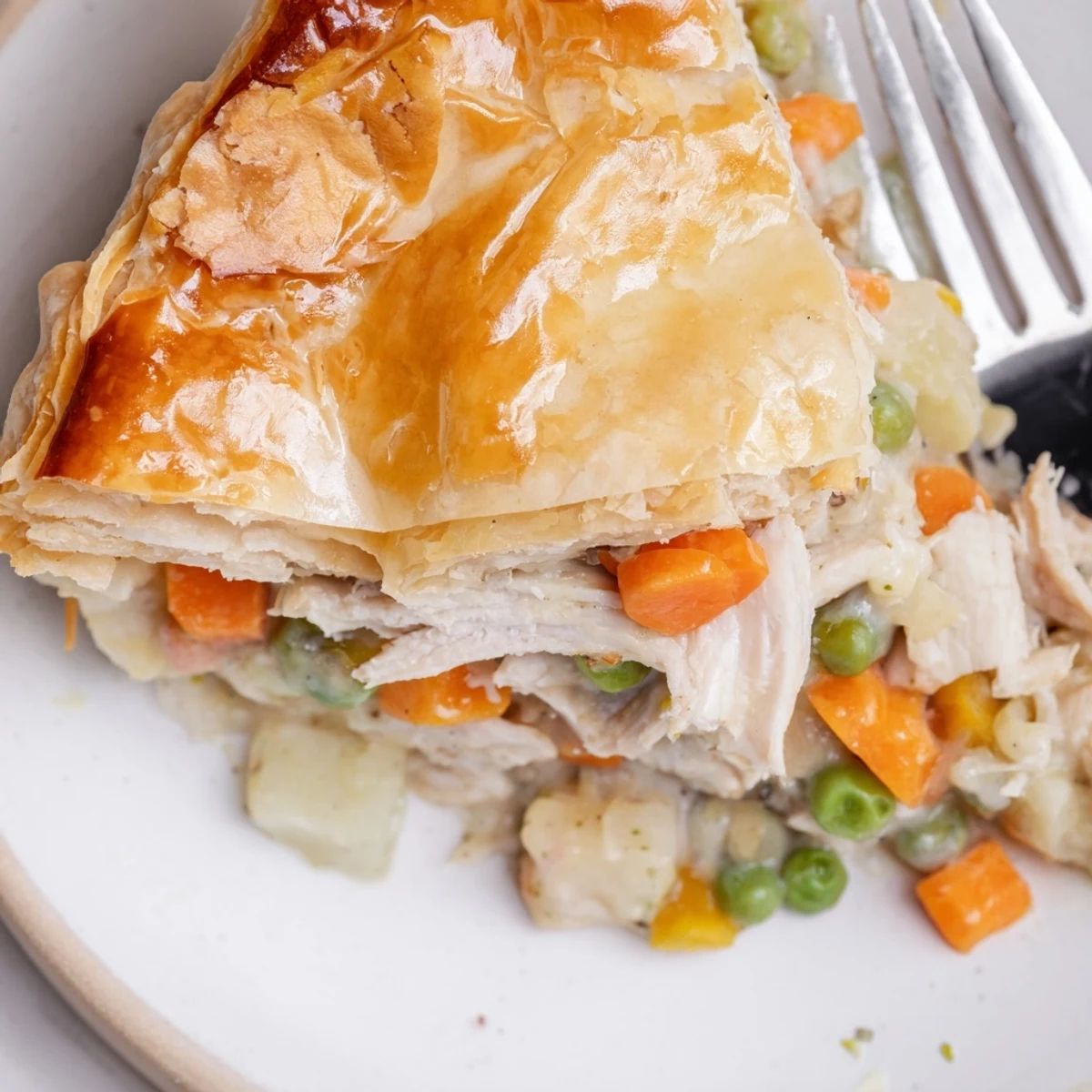
Save This pie has a way of becoming the meal people ask you to make when they need comfort, which is probably the highest compliment a recipe can get. There's something about sitting down to a warm, creamy pot pie that makes everything feel a little bit more manageable.
Common Recipe Questions
- → Can I use other poultry instead of turkey?
-
Yes, rotisserie chicken or cooked shredded chicken works well as a substitute, maintaining a similar texture and flavor.
- → How do I ensure a flaky puff pastry crust?
-
Keep the puff pastry cold until ready to use, handle gently to avoid melting, and bake at the recommended temperature for a golden, flaky finish.
- → What vegetables complement the turkey filling?
-
Carrots, celery, potatoes, peas, and onions provide a balanced mix of sweetness, earthiness, and texture.
- → Can I prepare the filling ahead of time?
-
Yes, the filling can be made in advance and cooled, then assembled with the pastry and baked when ready.
- → How do I achieve a creamy sauce without lumps?
-
Cook the flour with butter before gradually adding broth and milk while continuously stirring to ensure a smooth, thickened sauce.