
 Save
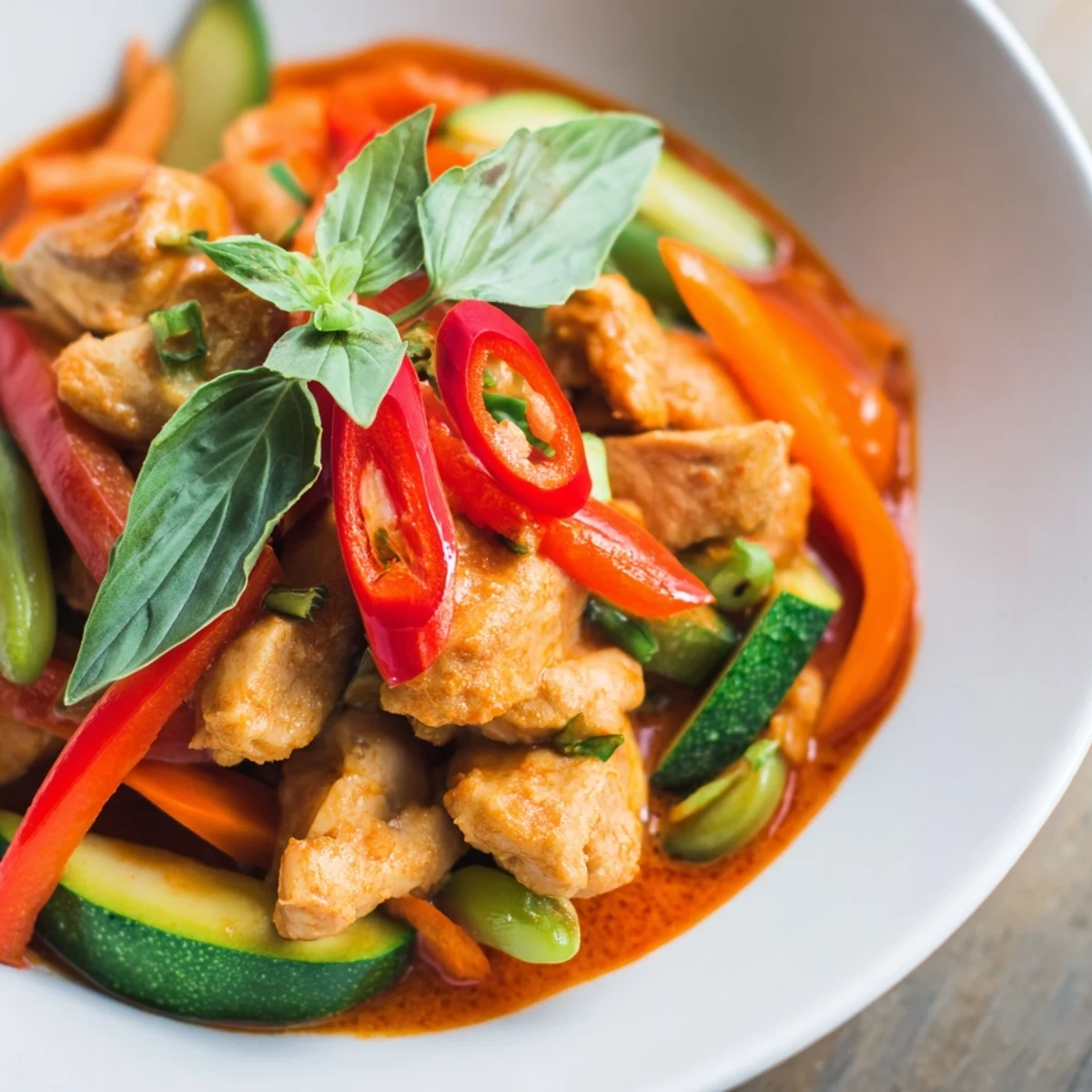
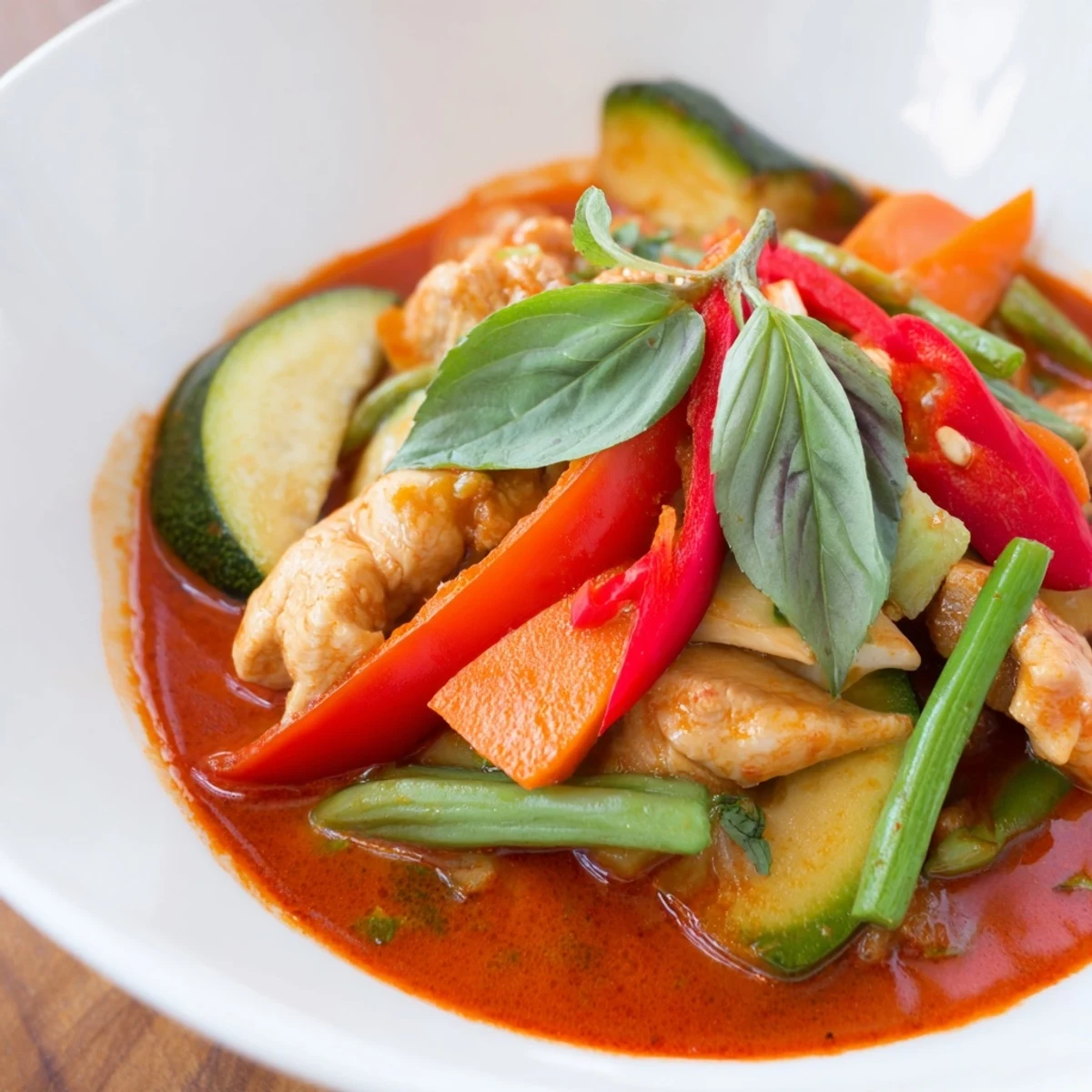
Save This spicy Thai red curry blends tender chicken pieces with colorful vegetables simmered in a rich coconut milk base, enhanced by fragrant red curry paste, fish sauce, and lime zest. Sautéed onions bring sweetness, while a medley of bell pepper, zucchini, snap peas, and carrots adds crisp texture. Garnished with fresh basil or cilantro and paired with jasmine rice, this dish offers a flavorful, warming meal perfect for any day.
The first time I really understood Thai curry was in a steamy kitchen in Bangkok, watching a street vendor tend to an enormous wok with the kind of casual confidence that comes from doing something a thousand times. Years later, I recreated that moment at home with what I had on hand, and somehow the spice, the coconut, the tender chicken all came together in a way that transported me right back. This recipe is my attempt to bottle that feeling—the kind of meal that fills your kitchen with aromatic steam and makes everyone stop what they're doing to ask what smells so good.
I remember making this for my sister on a cold evening when she'd had a rough day at work, and watching her face soften with that first spoonful was everything. The steam rising from the bowl, the way the basil released its perfume when she crushed it between her fingers—it became the kind of meal that reminds you why cooking for someone matters. That's when I stopped thinking of it as just a recipe and started thinking of it as a small act of care.
Ingredients
- Chicken thighs or breasts: Thighs stay more forgiving and tender, but breasts work if that's what you have; just watch them so they don't dry out.
- Thai red curry paste: This is where the soul of the dish lives, so don't skip it or substitute with a generic curry powder—the real stuff is worth finding at an Asian market or online.
- Coconut milk: Full-fat is non-negotiable here; the thin stuff will give you a watery, sad curry instead of the silky richness you want.
- Fish sauce: It smells intense and funky on its own, but trust it; it's the secret that makes everything taste like it came from Thailand and not a recipe blog.
- Fresh vegetables: The bell pepper, zucchini, snap peas, and carrot add color and texture, but more importantly, they remind your tongue that this is a complete meal and not just sauce with chicken.
- Lime zest and fresh basil: These finish things off with brightness and fragrance that elevate the whole dish from good to memorable.
Instructions
- Build the base:
- Heat oil in a large skillet over medium heat and sauté the onion slices for about 2 minutes until they soften and turn translucent. This isn't about caramelizing; you just want them ready to absorb flavor.
- Bloom the curry paste:
- Add the Thai red curry paste and let it cook undisturbed for a full minute, stirring occasionally. You'll smell the spices wake up, and that fragrant moment tells you the paste is releasing all its aromatic oils.
- Start the chicken:
- Add your chicken pieces and stir for 3–4 minutes until they're lightly golden on the outside but still raw inside. You're not cooking them through yet; you're just sealing in flavor.
- Build the sauce:
- Pour in the coconut milk and chicken stock, stirring gently to combine everything into a smooth sauce. Bring it to a gentle simmer—aggressive bubbling will break apart the chicken.
- Season the curry:
- Add the fish sauce, brown sugar, and lime zest, and stir well. These three ingredients are your seasoning trinity; they balance heat, salt, and brightness.
- Cook the vegetables:
- Add the bell pepper, zucchini, snap peas, and carrot, then simmer for 10–12 minutes until the chicken is cooked through and the vegetables are just tender but not soft. You want them to have some bite.
- Taste and adjust:
- This is where you become the chef; add extra fish sauce if it needs salt, more sugar if the spice is too intense, or a squeeze of lime if everything feels flat. Trust your palate.
 Save
Save There's a moment in every curry that feels like magic—when the kitchen fills with that golden steam and you taste it for the first time, and somehow it tastes exactly like comfort. That's the moment I live for in cooking, and it's why I keep making this.
The Heat Question
Thai curries are supposed to have a kick, but that's personal. If three tablespoons of curry paste feels too aggressive, start with two and taste as you go—you can always add more, but you can't take it out. Some people find the heat builds as they eat, so give it a few spoonfuls before you panic and add sugar. A squeeze of lime can actually make spice feel brighter and less aggressive, so that's my first move if something feels too hot.
What to Serve It With
Steamed jasmine rice is the classic pairing because the mild, slightly sweet rice soaks up the curry beautifully and gives your mouth little breaks from the spice. If you want something different, egg noodles work, or even just crusty bread for soaking up every last drop. Some people add a cold beer or a slightly sweet wine to cut through the richness, and that's not a bad instinct at all.
Making It Your Own
This recipe is flexible, and that's the whole point. Swap the chicken for shrimp if you want something lighter, or use tofu if you're cooking for someone who doesn't eat meat. Add bamboo shoots or baby corn for extra texture, or throw in whatever vegetables are about to go soft in your crisper drawer. The skeleton of this curry—the paste, coconut milk, fish sauce, and the technique—stays the same, and everything else is just a conversation between you and your kitchen.
- Start with less curry paste than you think you need, because spice keeps building as things simmer together.
- Taste constantly and adjust seasoning right before you serve; flavors change as things cool slightly.
- Fresh basil and lime wedges are not optional—they're the final brushstrokes that make this feel authentic and alive.
 Save
Save This curry is the kind of meal that stays with you—not just because it tastes good, but because it carries with it the feeling of care and warmth. Make it for someone you care about, and watch what happens.
Common Recipe Questions
- → What chicken cuts work best for this dish?
-
Boneless, skinless chicken thighs or breasts cut into bite-sized pieces are ideal for tender and even cooking.
- → Can the vegetable mix be varied?
-
Yes, adding bamboo shoots or baby corn can enhance texture alongside bell pepper, zucchini, snap peas, and carrot.
- → How can I adjust the spiciness?
-
Reduce the amount of Thai red curry paste or omit the sliced red chili to make the dish milder.
- → What are suitable beverage pairings?
-
A crisp, off-dry Riesling or a cold Thai beer complements the rich and spicy flavors perfectly.
- → Is this suitable for gluten-free diets?
-
Yes, using certified gluten-free fish sauce and chicken stock ensures this dish remains gluten-free.