
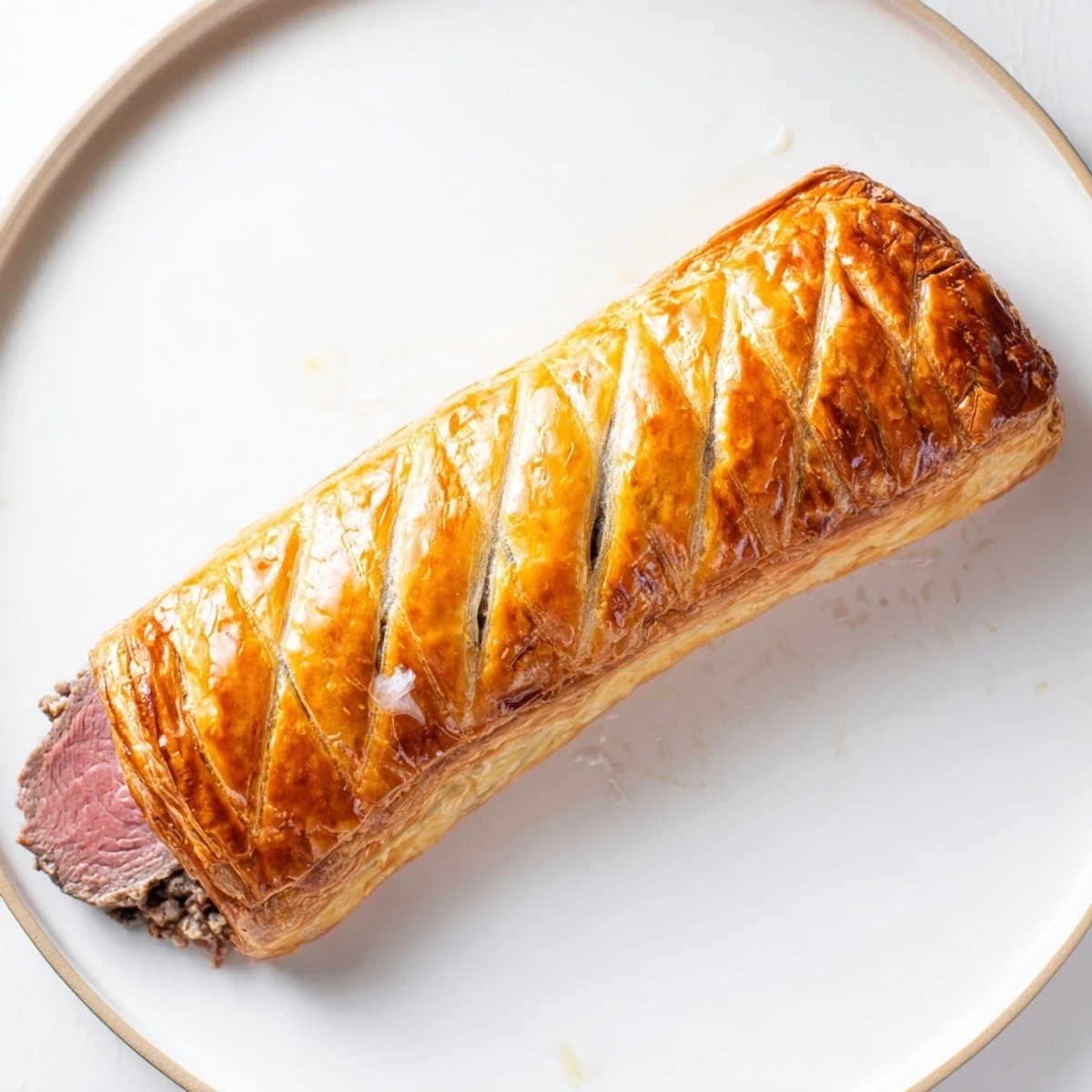
 Save
Save This classic dish combines a succulent beef fillet seared to lock in juices, layered with flavorful mushroom duxelles and prosciutto, all enclosed in crisp golden puff pastry. The process includes careful seasoning, precise searing, and a chill before baking to ensure a perfect crust and tender interior. Ideal for festive or elegant dinners, it pairs wonderfully with roasted vegetables or a rich red wine sauce.
I'll never forget the first time I attempted Beef Wellington—it was for my partner's birthday dinner, and I was absolutely terrified. I'd watched cooking shows where chefs made it look effortless, but standing in my kitchen with a pristine beef tenderloin, I felt the weight of expectation. That night, something magical happened. As the golden pastry emerged from the oven, the aroma filled every corner of our home, and when I sliced into it to reveal that perfect pink center surrounded by earthy mushrooms, I realized I'd created something truly special. It became the dish I reach for whenever I want to impress the people I love most.
I remember making this for a dinner party where one guest was a food critic—someone who'd dined everywhere. I was so nervous my hands shook while brushing the egg wash. But when they took that first bite, closed their eyes, and smiled without saying anything, I knew it was going to be okay. That silence said everything.
Ingredients
- Beef tenderloin (1.5 lb): This is the star, so choose center-cut and ask your butcher to trim it well—the quality here truly matters, and it's worth spending a bit more for meat that's evenly shaped
- Cremini or button mushrooms (1 lb): Finely chopped is key; you're creating a paste that clings to the beef, so don't rush this step or use a food processor—your knife and a little patience create better texture
- Prosciutto (8 thin slices): This creates a moisture barrier so your pastry stays crispy, and those thin slices overlap beautifully—ask the deli counter for paper-thin cuts
- Puff pastry (1 lb): Quality matters here too; all-butter pastry gives you that shatter you're aiming for when the fork cuts through
- Shallots and garlic: Minced fine because they're dissolving into the mushroom mixture, adding whispers of flavor rather than distinct pieces
- Fresh thyme (2 tsp): The dried version won't give you those little flavor bursts; fresh thyme is worth seeking out for this dish
- Dijon mustard (2 tbsp): A thin layer of this tangy mustard acts as a flavor bridge between the beef and mushrooms
- Egg yolk and milk: Your egg wash—this creates that restaurant-quality golden shine that makes people gasp when they see it come out of the oven
- Olive oil, butter, salt, and pepper: The fundamentals that somehow make everything taste like home
Instructions
- Sear your beef like you mean it:
- Get that skillet screaming hot—this is where the magic starts. When you lay that beef down, listen for the aggressive sizzle. You're not cooking it through; you're creating a golden crust that seals in the juices. Two minutes per side, turning only once. It'll feel quick, but trust it. Your beef should look bronzed and beautiful when you lift it out.
- Build your mushroom base:
- In that same skillet (all those beef drippings are liquid gold), melt your butter and let those shallots and garlic soften until fragrant. This takes just two minutes, and your kitchen will smell incredible. Then add your mushrooms—they'll look like a mountain of them at first, but as they release their moisture and shrink down over ten minutes, you'll understand why you needed so much. Keep stirring so nothing sticks. When it's finally dry and paste-like, you've got your duxelles. Taste it and season generously. This needs to be flavorful because it's the heart of your dish.
- Create your protective layer:
- Lay out that plastic wrap and arrange your prosciutto slices overlapping on it like shingles on a roof. They're creating a moisture barrier and adding salty, savory depth. Spread your cooled mushroom duxelles evenly over the prosciutto—don't be shy. This is flavor insurance.
- Wrap with intention:
- Brush that cooled beef with Dijon mustard—just a thin, even coat that clings to the meat. Lay it on top of your mushroom-covered prosciutto. Using the plastic wrap as your guide, roll everything tightly, sealing it like a present. The plastic wrap keeps it clean and helps it hold its shape. Twist the ends and refrigerate for twenty minutes. This resting time is crucial—it helps everything set and prevents the pastry from getting soggy when it meets the cold beef.
- Encase in pastry:
- Roll out your puff pastry on a lightly floured surface until it's large enough to completely wrap around your beef bundle. Place your unwrapped beef in the center and fold the pastry up and over, sealing the edges by pressing gently. You want it snug but not stretched. Place it seam-side down on your parchment-lined baking sheet—this helps it bake evenly and the seam stays hidden.
- Give it the golden treatment:
- Beat your egg yolk with milk and brush it generously over the pastry. This is what makes it gleam like a jewel when it comes out of the oven. If you want to be fancy, score the top lightly with a sharp knife in a decorative pattern—it looks intentional and beautiful.
- Bake to perfection:
- Into a 400°F oven it goes for forty to forty-five minutes. You're watching for the pastry to turn deep golden—not pale, not dark, but that rich, buttery gold. If your pastry is browning too fast, tent it loosely with foil. Use an instant-read thermometer inserted into the thickest part of the beef to check for doneness: 120–125°F is medium-rare, which gives you that beautiful pink center. When it comes out, rest it for ten minutes before slicing. Those ten minutes let the juices redistribute, so when you cut, everything stays tender and juicy.
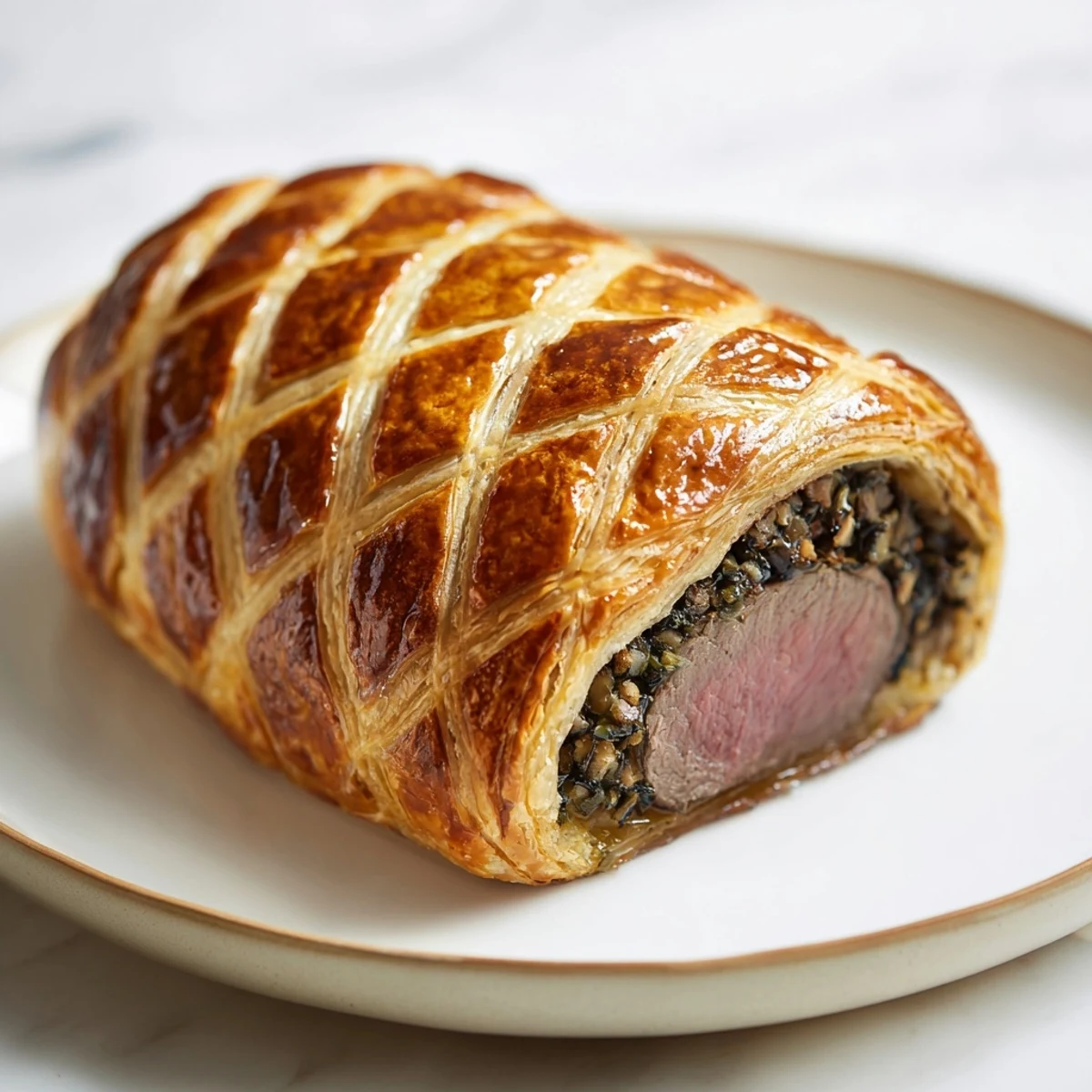 Save
Save Years later, I made this for my daughter's first dinner party as a young adult. Watching her nervously prep the kitchen, I saw that same fear I'd felt mirrored in her eyes. When we pulled it from the oven together and she made that first slice, her face lit up in a way I'll never forget. She'd done it. We both had. That's when I understood that Beef Wellington isn't really about impressing people—it's about connecting with them through something beautiful and delicious.
The Art of the Duxelles
The mushroom duxelles is what separates a good Beef Wellington from an unforgettable one. I learned this by trial and error—once I skipped the step of cooking the mushrooms until they were completely dry, and the finished pastry came out with a soggy bottom. Now I understand that you're not just cooking mushrooms; you're creating a concentrated, savory paste that clings to the beef and provides umami depth. The key is patience. Let them release their moisture, stir frequently, and wait until the mixture is almost paste-like. That's when you know you've built something magical.
Choosing Your Beef
A center-cut beef tenderloin is the most forgiving cut for this dish because it's naturally tender and cooks evenly. When I'm at the butcher counter, I ask them to show me a few options so I can choose one that's relatively uniform in thickness—this prevents one end from cooking faster than the other. The trimming matters too; ask them to remove the silvery sinew, which can be chewy. I've learned that spending an extra couple of dollars on quality beef here means the difference between a dish that's good and one that's genuinely memorable. This is your centerpiece, after all.
Temperature and Timing
The most important lesson I've learned about Beef Wellington is that an instant-read thermometer is your best friend. Oven temperatures vary, pastry browning speeds vary, and beef thicknesses vary—but that thermometer never lies. I check the thickest part of the beef, and when it reads 120–125°F, I know I'm pulling it out at exactly the right moment. That resting period of ten minutes afterward is sacred; don't skip it. During those ten minutes, the muscle fibers relax and the juices redistribute evenly, so when you slice into it, every bite is tender and juicy.
- Use an instant-read thermometer; it's the insurance policy that guarantees success
- Let the finished dish rest for a full ten minutes before slicing—this patience pays off in every bite
- If you're serving a crowd, you can make the beef wellington up to eight hours ahead and refrigerate it; just add five to ten minutes to the baking time if it's cold when it goes in the oven
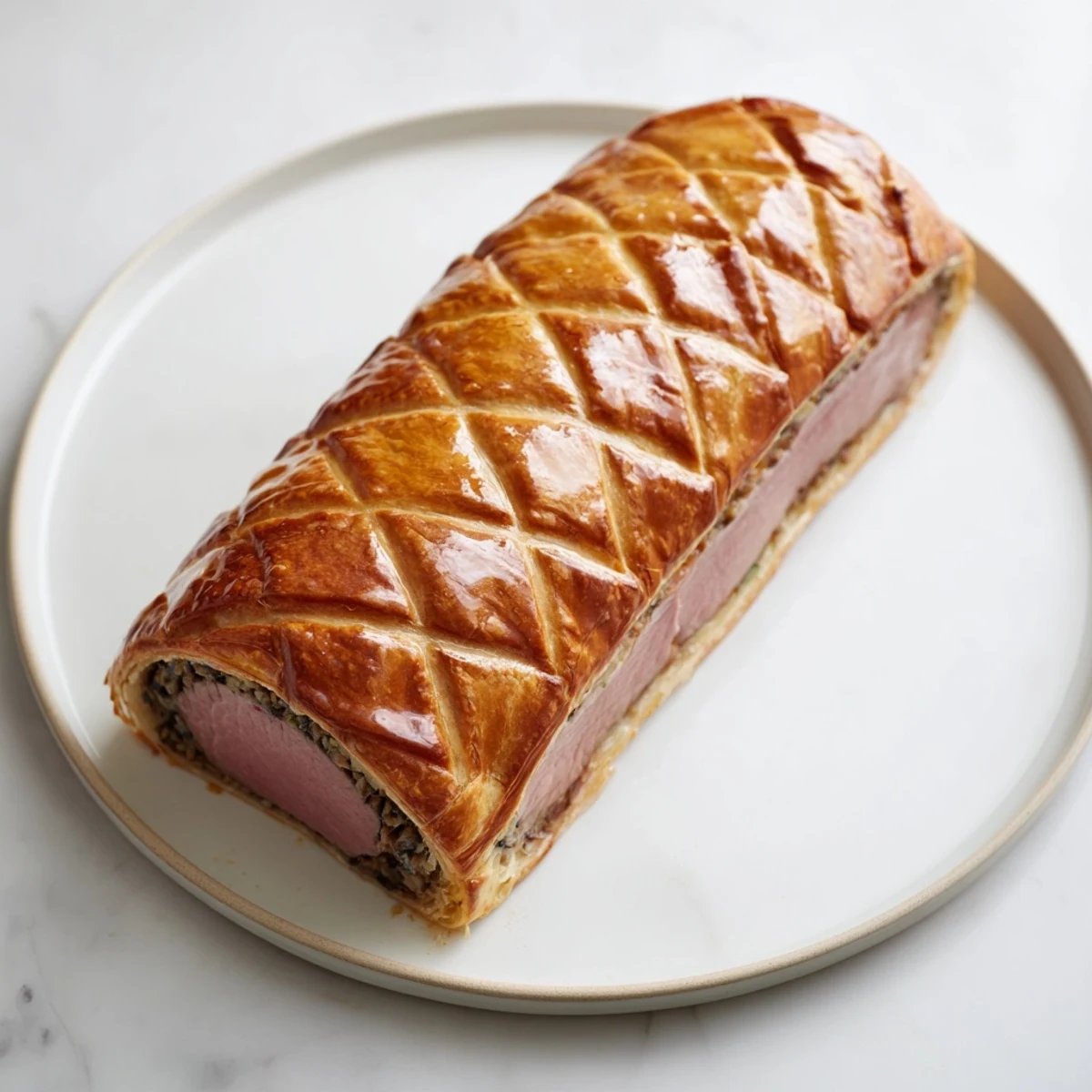 Save
Save Beef Wellington is the kind of dish that teaches you something new every time you make it. Serve it with a bold red wine, roasted vegetables, and mashed potatoes, and watch the faces of everyone at your table. That's the real magic.
Common Recipe Questions
- → What cut of beef is best for this dish?
-
Center-cut beef tenderloin is preferred for its tenderness and uniform shape, ideal for even cooking.
- → How do I prepare the mushroom mixture?
-
Finely chop mushrooms and cook them down with butter, shallots, garlic, and thyme until moisture evaporates, creating a rich duxelles.
- → Why chill the wrapped beef before baking?
-
Chilling helps the layers set and maintains shape, preventing soggy pastry during baking.
- → What temperature should the beef reach before removing from oven?
-
For medium-rare, aim for an internal temperature of 120–125°F (49–52°C) before resting.
- → Can this dish be prepared ahead of time?
-
Yes, you can assemble and chill it beforehand, then bake just before serving for convenience.