
 Save
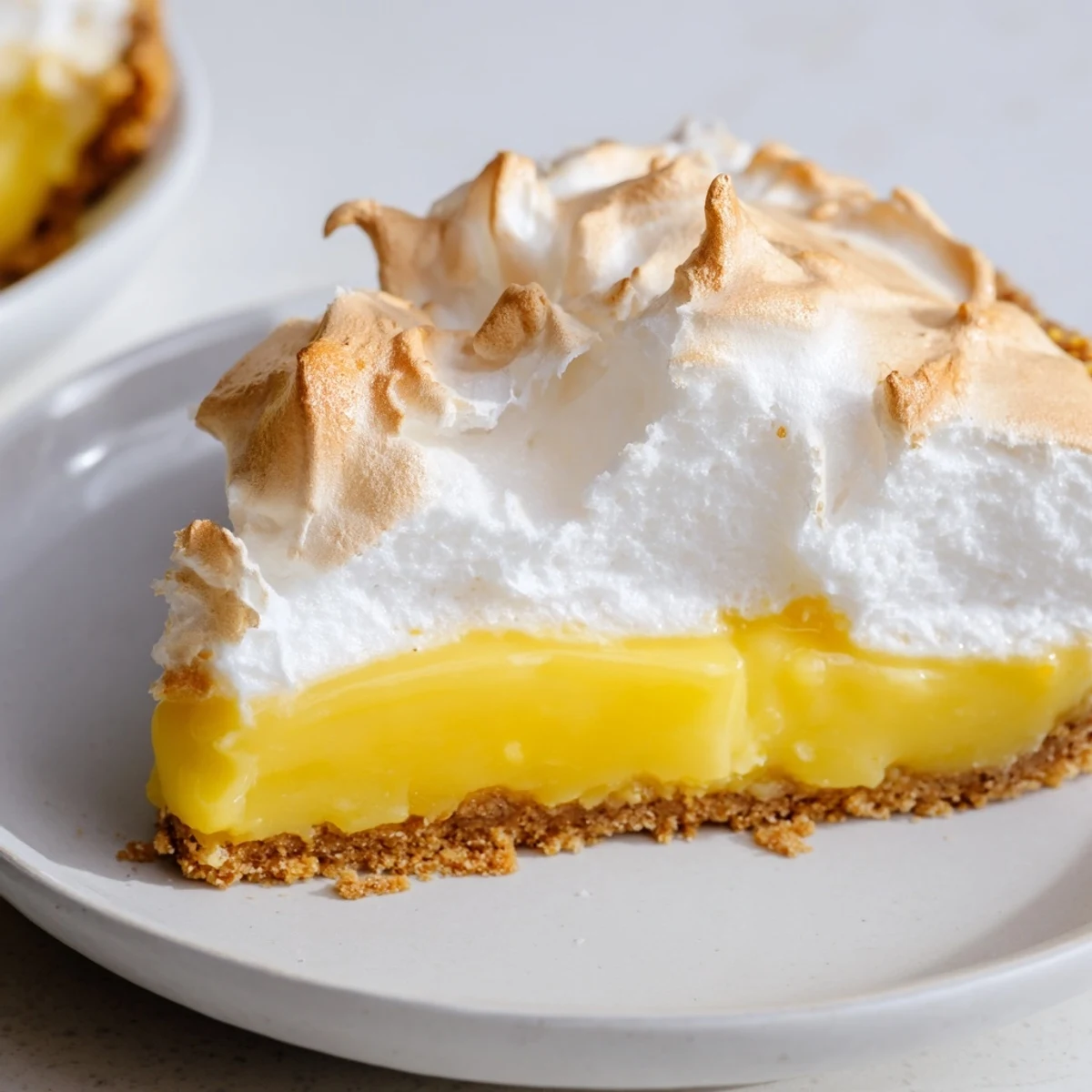
Save This delightful creation features a crisp, buttery graham cracker base that complements a smooth lemon filling bursting with zest. The topping is a cloud-like meringue, golden baked to perfection, providing a light contrast to the tart center. Chilling enhances flavors and texture, delivering a satisfying sweet-tart balance perfect for any occasion.
I started making lemon meringue pie the summer I moved into my first apartment with a real oven. The kitchen was tiny, but I wanted something that felt like celebration. A neighbor knocked just as I was zesting lemons, drawn by the smell, and we ended up talking through the window while I whisked the filling.
I made this pie for a book club once, and someone said it tasted like summer in a dish. The meringue had cracked a little in the oven, but nobody cared. We ate it straight from the pan with mismatched forks, and it became the pie people started requesting by name.
Ingredients
- Graham cracker crumbs: The base of the crust, these bring a gentle sweetness and slight molasses note that butter turns into something almost caramel-like when baked.
- Granulated sugar (for crust): Just enough to sweeten the crumbs without making them cloying, and it helps them bind together when pressed.
- Unsalted butter (for crust): Melted butter coats every crumb and turns the mixture into that perfect wet sand texture that holds its shape in the pan.
- Granulated sugar (for filling): This balances the sharp acidity of the lemon juice and helps the cornstarch do its thickening work.
- Cornstarch: The secret to a sliceable, glossy filling that doesnt weep or turn runny after a few hours in the fridge.
- Water: It dilutes the lemon juice just enough so the filling isnt puckering, and it gives the cornstarch room to bloom.
- Egg yolks: These add richness and a silky texture, and tempering them carefully prevents scrambled eggs in your filling.
- Freshly squeezed lemon juice: Bottled juice will work in a pinch, but fresh lemons give you that bright, clean citrus punch that makes the pie sing.
- Lemon zest: The oils in the zest add aromatic depth that juice alone cant deliver, and a little goes a long way.
- Unsalted butter (for filling): Stirred in at the end, it gives the filling a glossy sheen and a richer mouthfeel.
- Egg whites: Room temperature whites whip up faster and higher, creating that cloud-like meringue that crowns the pie.
- Cream of tartar: This stabilizes the egg whites and helps them hold their peaks without weeping or deflating.
- Granulated sugar (for meringue): Added gradually, it dissolves into the whites and creates those stiff, glossy peaks that brown so beautifully.
- Vanilla extract: Just a hint to round out the sweetness and add a warm background note to the meringue.
Instructions
- Preheat and prep:
- Turn your oven to 350°F so its ready when you need it. This gives you time to focus on the crust without rushing.
- Make the crust:
- Toss the graham crumbs, sugar, melted butter, and a pinch of salt in a bowl and stir until it looks like damp sand. Press it firmly into your pie dish, working it up the sides evenly so it doesnt crack later.
- Bake the crust:
- Slide it into the oven for 8 to 10 minutes until the edges turn golden and the kitchen smells like toasted honey. Let it cool while you start the filling.
- Cook the filling base:
- Whisk sugar, cornstarch, and salt in a saucepan, then slowly add the water while whisking. Set it over medium heat and keep stirring until it thickens and starts to bubble, which takes about 3 to 5 minutes.
- Temper the yolks:
- Whisk your egg yolks in a separate bowl, then ladle a little of the hot mixture into them, whisking fast. Pour the warmed yolks back into the saucepan and cook for another 2 minutes, stirring constantly until thick and glossy.
- Finish the filling:
- Pull the pan off the heat and stir in the lemon juice, zest, and butter until everything melts together into a smooth, sunny custard. Pour it right into your cooled crust.
- Whip the meringue:
- Beat the egg whites and cream of tartar until soft peaks form, then add the sugar a little at a time, beating until the peaks stand up stiff and shiny. Stir in the vanilla at the end.
- Top and seal:
- Spoon the meringue over the warm filling, making sure it touches the crust all the way around to seal. Use the back of a spoon to create swirls and peaks that will brown beautifully.
- Bake the meringue:
- Return the pie to the oven for 15 to 18 minutes until the tips of the meringue turn golden brown. Watch it closely near the end so it doesnt burn.
- Cool and chill:
- Let the pie sit at room temperature for an hour, then move it to the fridge for at least another hour before slicing. This helps the filling set completely.
 Save
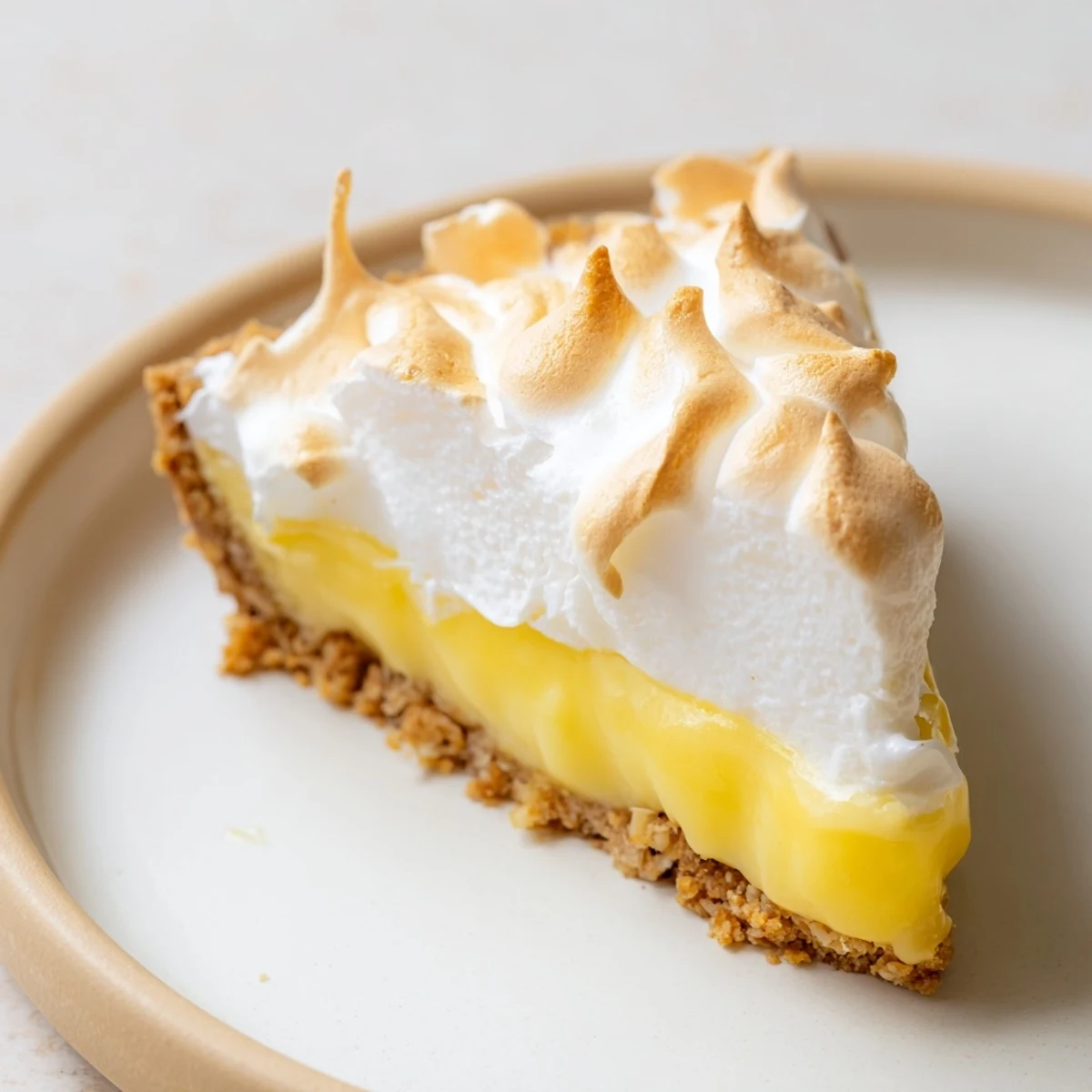
Save One afternoon I brought this pie to a potluck, and a friends kid asked if clouds tasted like this. The adults laughed, but I understood exactly what she meant. Theres something light and happy about lemon meringue that makes it feel less like dessert and more like a little edible bit of sky.
How to Know When the Meringue Is Ready
The meringue is done when you can turn the bowl upside down and nothing moves. The peaks should stand straight up and look glossy, not grainy. If you rub a bit between your fingers and feel sugar crystals, keep beating until they dissolve completely.
Storing and Serving Tips
This pie is best eaten within two days because the meringue will start to weep after that. Keep it loosely covered in the fridge, and slice it with a knife dipped in hot water for clean cuts. Let it sit at room temperature for about 10 minutes before serving so the filling softens just a little.
What to Do If Your Filling Turns Out Runny
If your filling didnt set, it probably didnt cook long enough or the cornstarch didnt activate fully. You can pour it back into a saucepan, whisk in another tablespoon of cornstarch mixed with a little water, and cook it again until thick. It happens, and its fixable.
- Always bring the mixture to a full bubble so the cornstarch can do its job.
- Dont skip the 2-minute cook after adding the yolks, or the filling wont thicken properly.
- Chill the pie completely before slicing or the filling will ooze out when you cut into it.
 Save
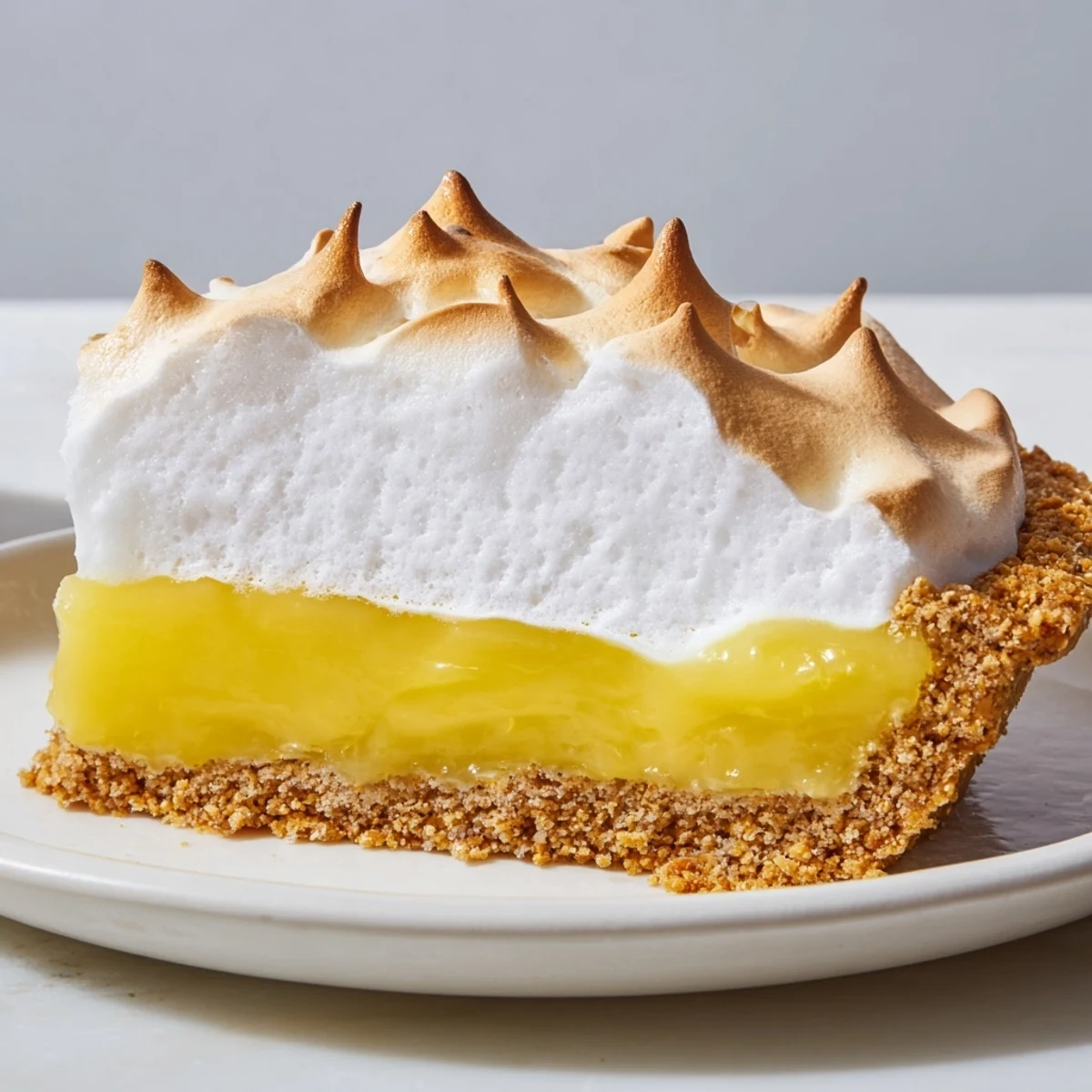
Save Every time I pull this pie from the oven and see those golden peaks, I feel like Ive made something worth sharing. Its the kind of dessert that makes people lean back in their chairs and sigh, and thats all I ever want from a recipe.
Common Recipe Questions
- → What makes the graham cracker crust special?
-
The crust combines finely crushed graham crackers with melted butter and sugar, creating a buttery, crunchy base that balances the tart lemon and airy topping.
- → How is the lemon filling thickened?
-
Cornstarch is used to thicken the lemon mixture, ensuring a smooth, custard-like texture that holds firm when sliced.
- → What tips help achieve perfect meringue peaks?
-
Use room temperature egg whites, add cream of tartar, and gradually beat in sugar until stiff, glossy peaks form for stable and fluffy meringue.
- → Why is it important to spread meringue to the crust edge?
-
Spreading meringue to the crust seals the filling, preventing shrinking and ensuring the topping bakes evenly with no gaps.
- → How long should the dessert be chilled before serving?
-
Let it cool at room temperature then chill for at least one hour to set the filling and blend flavors.